The members have gathered, now it's time for the "first rehearsal"—what will be decided in the first practice session
The exhilaration of finally getting all the band members together is something special, no matter how many times you experience it. You put out a call on Membo and people apply, or you apply to a call that interests you and get accepted—you exchange messages, and finally the conversation turns to, "Okay, let's have a studio rehearsal." This is when the band truly begins.
However, for someone forming a band for the first time, this "first rehearsal" is full of more unknowns than you might imagine. How do you book a rehearsal studio? How much does it cost? What should you bring? What should you start with on the day? What knobs on the amp should you adjust and how? I myself had a bitter experience during my first studio practice, where it took me nearly 30 minutes from the moment I entered the studio until I could actually make any sound, and in the end, I couldn't even play through two songs in the two-hour session.
And here's the important point: the success of the first practice session directly impacts whether the band will continue or not . If the first rehearsal ends with "That was fun, let's do it again," the band will naturally make plans for the next one. Conversely, if the planning is poor, resulting in awkward silences or a messy sound, it's not uncommon for the band to simply fizzle out with a "We'll contact you again." It would be a terrible waste to lose the connections you've made with friends through Membo due to insufficient preparation.
This article provides a step-by-step guide to everything you need to know to make your first band practice a success, from basic studio knowledge and booking methods to the flow of the day, the fundamentals of volume balance, how to deal with common mistakes, and tips for making your practice a success. If you are still in the stage of looking for band members, please read our sister articles, " The Complete Guide to Finding Band Members 2026" and " The Complete Guide for People Who Want to Join a Band, " first. This article is for those who have found members and are ready for their first practice.
There's one more thing I want to convey from the start. What you should be looking at in your first rehearsal isn't each other's playing technique. It's whether you feel like you want to go into the studio with these people dozens of times in the future . If you design your first rehearsal as a place to confirm that someone who seemed good in Membo 's message turned out to be even better when they actually played—you'll be able to relax, and as a result, the performance will go well. Technical differences can always be filled in later. The initial value of the relationship can only be created in the first rehearsal.
Basic knowledge about rehearsal studios — pricing, booking methods, and cancellation policies
First, let's understand the basics of a rehearsal studio (music studio). A rehearsal studio is a practice space that can be rented by the hour, with a soundproofed room permanently equipped with drum sets, guitar amplifiers, bass amplifiers, PA (sound system), microphones, etc. The word "rehearsal " originally refers to a practice session simulating the actual performance, but in the world of bands, it is often used to refer to any joint practice session in a studio, regardless of whether there is an actual performance or not, as "rehearsal" or "studio practice."
Pricing structure — Two options: "Band practice" and "Individual practice"
Most studios have two main pricing categories.
- Band practice (regular use) — This is the basic form of renting a room by the hour. The price is determined by the size of the room and the time of day, with the going rate in urban areas being around 2,000 to 4,000 yen per hour. It tends to be cheaper during weekday afternoons and more expensive at night and on weekends. When split among a band, the cost per person is often only a few hundred to a thousand yen.
- Individual practice (solo practice) — This system allows one or two people to use a room at a low cost (around 500 to 1,000 yen per person per hour), although reservations cannot be made until the day of or the day before. Most studios offer this as an effective use of empty rooms. It is extremely useful for drummers' basic practice or for individual practice before a first rehearsal.
This "individual practice" system is often unknown to those who have just started a band. Having a place where you can practice alone in an environment similar to a real performance is invaluable, so please keep it in mind. For details on the overall costs of band activities, please refer to our complete guide to band expenses ; reading that will give you a good overall picture.
How to count time, late-night packages, student discounts — systems that are useful to know about.
Let me add a few more details about the fees. Studio usage time is generally counted from "entry to exit," and this includes the time for setting up and cleaning up. So, if you book a 2-hour session, it's realistic to assume that you'll actually have around 90 minutes to play. Also, many studios have the following advantageous systems.
- Package deals —plans that offer discounted rates for extended periods, such as late-night hours (e.g., 11 PM to the next morning) or a few hours during the day. The "Friday Night Package" is a popular choice for bands comprised of working professionals.
- Student discounts – Many stores offer a 10-20% discount upon presentation of a student ID. It's definitely worth checking if they accept student bands.
- First-time discounts and new band discounts —some shops offer discounts for bands using their services for the first time. This is a welcome system for newly formed bands.
A band that has just come together at Membo doesn't yet know each other's financial habits. That's why it's important to share a common understanding of how much each band is willing to spend per practice session from the start to prevent future dissatisfaction. It's safest to start with a combination that keeps the cost down to around 1,000 yen per person (for example, splitting a 2-hour practice session in a medium-sized room on a weekday evening among four people).
How to make a reservation — Phone, Web, App
Reservations are typically made by phone, web form, or dedicated app. For example, an increasing number of studios, such as SOUND STUDIO NOAH , one of the largest chains in the Tokyo metropolitan area, allow you to check availability and make reservations entirely online. If it's your first time using a studio, you'll often need to register as a member (and show identification), so it's a good idea to arrive a little early on the day of your visit.
The following are the general questions you'll be asked when making a reservation. Sharing this information with your group members beforehand will help ensure a smoother response.
- Number of users and group composition —they can suggest an appropriate room size based on the number of people.
- Usage time - For a first rehearsal, 2 hours is standard. 1 hour is too short, and 3 hours is often too long for concentration to last.
- Availability of rental equipment — whether you need to rent items such as cables, cymbals, and keyboards.
Cancellation policy — Don't take this lightly, or you'll end up in trouble.
One thing that's surprisingly often overlooked is the cancellation policy. Many studios charge a cancellation fee if you cancel less than a few days before the scheduled date (2 to 7 days depending on the studio) . Cancellations the day before or on the day of the reservation usually incur a charge of 50-100% of the fee. It's common for someone to suddenly be unable to make it during a band's first rehearsal, so be sure to check the cancellation policy when making a reservation and share it with all the members. This is especially important if you've just met through Membo . And importantly, you should loosely decide beforehand who will pay the cancellation fee if one is incurred. If you proceed without discussing money ambiguously, it can create a bad atmosphere even in a newly formed band.

Studio Selection Checklist — Location, Equipment, Size, and Recording Environment
When choosing a studio for your first rehearsal, don't just pick one because it's cheap. In my experience, you should choose a studio with good conditions, especially for your first session. Here are the points you should check, in order.
Location — Prioritizing a location that is a midpoint for everyone and close to a train station.
Location is the top priority. For band members (especially guitarists and bassists) who have to carry equipment, a studio far from a train station is a big burden. If the members live in different places, it's best to look for a studio near a terminal station that's easily accessible to everyone. Members who come together through a service like Membo often live far apart, so it's important to discuss this from the start to avoid situations where "one person has to travel an hour and a half every time." Fairness in choosing a location may seem insignificant, but it has a big impact on the lifespan of a band.
Permanent Equipment — Amplifier Type and Drum Condition
The studio's website always lists the permanent equipment in each room. Here are the points you should check:
- Guitar and bass amp models and number — If there are two guitarists, choose a room with two guitar amps.
- Drum set configuration —please confirm in advance if you require a double bass drum setup, additional cymbals, etc. Many drummers bring their own snare drums and pedals.
- PA and microphone count — If you have multiple vocalists or want to include backing vocals, check the number of microphones needed.
- Availability of keyboards/electronic pianos — Many rooms don't have keyboards permanently installed, and they may be available for rent (for a fee). Bands with a keyboardist should definitely check this. The specific equipment needs of keyboard players are detailed in our complete guide to finding a keyboardist when you can't find one.
Room size — Approximately 1.5 tatami mats per person is a good guideline.
If the room is too small, the sound will saturate, making it difficult to hear each other. As a guideline, a room of about 1.5 to 2 tatami mats per member is comfortable. For a four-person band, a room of around 7 to 10 tatami mats is a standard choice. For the first rehearsal, it's better to choose a slightly larger room so that the sound separates better and it's easier to hear "who is playing what." A difference of a few hundred yen can greatly improve the quality of practice, so I recommend not skimping on this.
Recording environment — Recording from the first session is strongly recommended.
As I will explain in more detail in a later chapter, I strongly recommend recording from the very first rehearsal. Some modern studios offer recording equipment rentals or services that allow you to record directly from the room's mixer. However, even just placing your smartphone in the center of the room and recording is usually sufficient. It's a good idea to check whether recording is permitted (most studios allow you to record your own performance) and whether the environment is suitable for recording.
If you're unsure, "a room in a major chain store" is the right choice for your first visit.
If comparing all the checkpoints mentioned so far seems too much work, for your first time, choosing a medium-sized room (7-10 tatami mats) at a major chain is a safe bet. Chain stores have well-maintained equipment, and the staff are used to dealing with beginners. The price may be a little higher than that of a long-established, independently owned studio, but in your first time, when you're "completely clueless," that sense of security is well worth it. Conversely, once your band is established, it can be fun to explore independently owned studios for their better sound quality and regular customer discounts. You can also find information on local music studios and live venues using Membo 's map-based search, so take a look at the options in your city.
Preparations before the first practice — Song selection, sharing audio files, individual practice, and what to bring
Once you've booked the studio, you start preparing for the day. I can confidently say that 80% of the success of your first rehearsal depends on the preparation, not on the day itself .
Narrow down the required songs to 2-3 and make your decision.
First, decide on the songs you'll play together on the day. The key is "don't be greedy." For the first time, stick to 2-3 songs, and the rule of thumb is to choose standard songs that everyone knows to some extent, or songs with relatively simple original versions. You can tackle difficult songs once you've gotten used to each other's sounds. For more detailed information on how to choose songs when starting a cover band, please refer to the guide for people who want to start a cover band .
The discussion about choosing songs itself is actually a great opportunity to learn about each member's musical tastes. If you use Membo 's messaging function or group chat to have each person suggest two songs as candidates and then choose from those that everyone can play, it avoids being biased towards any one person's preferences and allows everyone to be involved.
Share the audio and materials with everyone.
Once the song is decided, share a link to the original recording (use the official one), the chord chart, lyrics, and key (whether it's in the original key or if it needs to be lowered to suit the vocalist). Confirming the key is especially important; if it's discovered on the day of the recording that the vocalist can't sing in that key, the song will almost certainly be rejected. Make sure to check with the vocalist beforehand whether they can sing in the original key. The characteristics of the vocal part are explored in more detail in our complete guide on how to find a vocalist when you can't find one .
Individual practice — The general rule is "Finish your part at home."
The biggest misconception about band practice is thinking that "the studio is a place to practice." More accurately, the studio is a place to "coordinate," not a place for individual practice . If you go into the studio without being able to play your part, you'll keep everyone else waiting. Each person brings their part to about 80% completion, and in the studio, they focus only on "the problems that arise when everyone plays together"—this is a common trait of bands that improve quickly.
If you can't yet play at the original tempo, the quickest way to improve is to use a metronome and gradually build up to a slow tempo. A free smartphone app is sufficient, so make it a habit to always use a metronome during individual practice. This will also help prevent the "speeding up" problem discussed later. If you've just started playing an instrument and joined a band, you should also read "How even beginners can join a band ."
If time permits, a pre-rehearsal with just the rhythm section can also be effective.
This is a slightly more advanced technique, but if the members' schedules align, having the drummer and bassist practice together briefly before the first full band rehearsal, using individual practice fees, will make a huge difference in stability on the day of the rehearsal. The rhythm section is the foundation of a band. If the foundation is solid, the song won't fall apart even if the guitar, vocals, and keyboards on top waver a little. In situations like bands formed through Membo , where the members' playing experience is still unknown, this "preliminary foundation check" greatly increases the success rate of the first rehearsal. For building relationships within the rhythm section , the complete guide for bassists and drummers should also be helpful.
Packing List — Avoid forgetting something on the day!
Organize your belongings for each part of the performance. Generally, you should bring everything yourself except for the equipment provided in the studio (drums, amps, PA system, microphones).
| part | Required | It gives me peace of mind |
|---|---|---|
| guitar | Guitar, 2 cables, tuner, picks | Spare strings, effects pedal, 9V battery |
| base | Bass guitar, 2 cables, tuner | Spare strings, compressor, etc. |
| drum | Sticks (multiple pairs) | My snare drum, kick pedal, practice pad |
| vocal | Lyrics, chord charts, and drinks (room temperature water is the standard). | My microphone, throat lozenges |
| keyboard | Main unit (or pre-booked rental), power adapter, shield | Stand, sustain pedal |
| Common to all | Audio recordings and sheet music for the assigned song, smartphone (for recording), cash (for splitting the bill) | Earplugs (for those unaccustomed to loud noises), writing utensils |
The reason for specifying "two" cables is that you'll need two if you're using effects pedals, and also as a precaution against cable breakage. You can rent them at the studio, but the number is limited, so it's safer to bring your own. Also, when communicating about these preparations, you often won't have an established way of contacting members you've just met through Membo . If you decide on a group to communicate in during the initial meeting, it will make subsequent arrangements much easier.
A complete simulation of the day's schedule — how to use the 2 hours
The big day has finally arrived. Here, assuming a two-hour session, let's simulate the flow from entering the studio to leaving it in chronological order. This part can be difficult to imagine if it's your first time, so I'll try to be as specific as possible. In many cases, the first meeting with members you met at Membo will be at the studio, so it's best to set the meeting point as "in front of the studio reception 15 minutes before the start time" to avoid getting lost.
Entering the store - Entering (10 minutes before start - 0 minutes)
You should arrive at the studio 10 minutes before your scheduled time. Tell the receptionist your reservation name, and if it's your first time at the studio, complete the membership registration. Receive your room key (or card), wait for the previous user to leave, and then enter the room. Payment methods (pre-payment or post-payment) vary by studio , so check with the receptionist. If you need to rent any equipment (cables, keyboard, etc.), this is the time to do so.
Setup (0-15 minutes)
Upon entering the room, the first thing to do is set up individually. The drummer adjusts the height of their chair and the position of their snare and cymbals, while guitarists and bassists plug their cables into their amplifiers and tune their instruments. The vocalist adjusts the height of their microphone stand and turns on the PA system. What everyone should be mindful of at this point is to position themselves (facing each other) in a circular arrangement where they can see each other's faces, rather than the "battle of the bands" format used in live performances . For the first rehearsal, it's overwhelmingly easier to coordinate when you're positioned in a way that allows for eye contact.
When you're not used to it, setting it up can take more than 20 minutes. If you familiarize yourself with the basic operation of the amplifier (explained later), you can significantly reduce this time.
Sound output and volume adjustment (15-25 minutes)
Once everyone is ready, we'll do a quick sound check. We'll play just the first chorus of the first song to check if the vocals are audible and if the guitar is too loud compared to the drums, and then adjust the volume of the amps and PA system. If we skimp on these 10 minutes, we'll end up playing for the rest of the time in a state where we can't hear or the sound is too loud. We'll discuss volume balance in more detail in the next chapter.
Play the first song "without stopping" (25-45 minutes)
For the first song, the goal is to play through it all the way to the end without stopping, even if there are a few mistakes. If someone makes a mistake and stops midway, then they start over, and then stop again somewhere else, time will just pass by without you getting a grasp of the song as a whole. One playthrough without stopping is more valuable than five plays with stops . After the first playthrough, share just two or three points that you noticed and play through it again. This cycle of "play through → review → play through" is the basic format.
Tracks 2 and 3 (45 minutes to 85 minutes)
Move on to the second song in the same manner, and then the third if you have time. Aim for 20 minutes per song. If you're running behind schedule, you'll likely be more satisfied if you skip the third song and focus on the two. Conversely, if you have extra time, it's fun to have a jam session after the assigned songs, where you can freely play around with simple chord progressions. Sometimes, a more relaxed session reveals the individual musicality of the members more than a strictly planned set of songs.
Review and scheduling for the next meeting (85-100 minutes)
About 20-30 minutes before the end, I like to stop playing for a bit and take some time to reflect and talk about "what's next." Listening back to the recording and sharing impressions, suggesting possible dates for the next session, deciding on a song to work on until then— getting this "next appointment" done in the studio is the biggest secret to preventing the band from naturally fading away . If you start scheduling via messages after the band has disbanded, replies will stagnate and the enthusiasm will cool down. Let's decide on the date for the next session while everyone is still in the studio. If you've finally met the members of Membo after weeks of searching, this extra effort is all the more valuable.
How to take breaks — 5-minute chats build camaraderie.
I recommend taking a 5-10 minute break about an hour into your two-hour practice session. This is beneficial not only for resetting your ears and concentration, but even more importantly, for the benefit of casual conversation. Talking about your favorite bands, how you started playing an instrument, how you found this recruitment on Membo —these kinds of casual conversations quickly bring the members closer together. There's a clear difference in how easily a band can get together a second time between a band that just plays and then disbands and a band that has had time to chat. In my experience, half of the satisfaction of a first rehearsal is determined by the atmosphere during this break.
Cleaning up and leaving the store (100-120 minutes)
Start cleaning up 10 minutes before the end of your session. Turn all the amp knobs back to zero and turn off the power, return the borrowed equipment, put the chairs and equipment back in their original positions, and take your trash with you. Many studios charge extra if you exceed the departure time, so be punctual. Bands that practice "leaving the studio cleaner than you found it" tend to be remembered by the studio staff, who are often more accommodating.
Please note that this time allocation is only for the first rehearsal. For more efficient use of the two hours once the band is established, please refer to "How to Proceed with Band Practice — A Guide to Making the Most of Two Hours in the Studio ," which details the process for band practice sessions.
The basics of volume balance and amp settings — the "vocals are inaudible" problem
The first hurdle beginner bands face isn't technique or rhythm, but almost certainly volume balance . This is especially true for bands brought together through services like Membo , where members have varying levels of musical experience. Among these issues, "the vocals are completely inaudible" is a classic problem during the first rehearsal. Let's understand the underlying mechanics.
Why do the vocals become inaudible?
The reason is simple: a human voice can only compete with live drums and a full-volume amplifier through a microphone and PA system . Guitar and bass amplifiers can easily produce deafening volume with the flick of a knob. On the other hand, there's a limit to how loud a vocal can be, as raising the PA fader too high will cause feedback (a high-pitched squeal). In other words, the only way to make the vocals audible is for the instrumentalists to lower their volume .
At the first rehearsal, it's a good idea to establish this common understanding among everyone from the start: "The maximum volume for this band is the volume at which the vocals can be heard." I understand the desire to play comfortably, but a band practice where the vocals can't be heard doesn't function as a proper rehearsal.

Basic procedure for setting up an amplifier
Here's a summary of the basic steps for those using a studio amp for the first time.
- Make sure all the knobs are set to 0 before turning on the power —if you turn on the sound with the previous user's settings, it will result in a loud noise accident. Always set the volume to 0 when turning the power on or off.
- Understanding the difference between GAIN and MASTER : GAIN determines the degree of distortion, while MASTER determines the final volume. For a clean sound, use a low GAIN setting and adjust the volume with MASTER; for a distorted sound, increase the GAIN and keep MASTER moderate.
- Start with all EQ (BASS/MIDDLE/TREBLE) at the 12 o'clock position —if in doubt, play with all at the center (12 o'clock position) and adjust gradually from there. Extreme settings will make the sound less clear.
- The volume should be determined with the entire band playing —a volume that sounds just right when playing alone will either get lost in the mix or be too loud when everyone is playing together. Final adjustments should always be made with the full band playing.
The absolute basics of PA (mixer)
The volume of the vocal microphone is adjusted using the PA system in the room—more precisely, the mixing console (mixer) . Basically, you only need to adjust the fader (volume control) for the channel the microphone is plugged into, and the overall main fader. If feedback occurs, first, avoid pointing the microphone towards the speakers; if it persists, slightly lower the fader. If you're unsure, the reception staff will be happy to help. Studio staff are helpful to beginners, so don't hesitate to ask for their assistance.
Also, be mindful of the "divided frequency range" between guitar and bass.
After vocal issues, the next most common problem is frequency range issues such as "the bass is inaudible" or "the guitar and bass sound muddy." The low strings of the guitar and the bass frequency range tend to overlap, and if the guitarist turns up the bass too high on the amp, the bass loses its place. The basic idea is that the guitar should have a moderate bass and a strong middle section, while the bass should focus on providing a low-frequency foundation . In a band with two guitars, slightly changing the EQ and tone settings of both players (e.g., one with a crunch sound, the other with a cleaner sound) will reduce the overlap and allow each player's sound to be heard. Experiencing this "state where everyone's sound is clearly separated" during the first practice session will provide a benchmark for subsequent practice.
A request to drummers, and a view from a drummer's perspective.
The drums are the starting point for volume. Since the volume of acoustic drums cannot be electrically adjusted, the "hardness with which the drums are struck" effectively determines the overall volume of the band. In a small room, the drummer is asked to play a little more softly, and the other band members adjust their amplifiers based on that volume—this is the basic setup. Conversely, forcing a drummer to play softly will lower the quality of the performance, so it's best for bands that want to play loudly to choose a larger room from the start. Is there really a shortage of drummers? — This is covered in detail in our complete guide to finding members for each part, including the reality of recruitment and how to find bassists and drummers when you can't find them .
Common mistakes and solutions during the first rehearsal: The song doesn't come through, the tempo is too fast, and no one takes charge.
Even with preparation, something always goes wrong during the first rehearsal. That's perfectly normal. The important thing is to know common mistakes and how to deal with them so you don't panic on the day itself.
Failure 1: The song doesn't play to the end.
This is the most common problem. The cause is usually either (1) someone hasn't memorized their part, or (2) people have different understandings of the song's structure (how many bars the intro is, where to return after the interlude).
The first step in addressing this is to confirm the song's structure before playing. Simply verbally confirming everyone's understanding of the structure— "8 bars intro → Verse A → Verse B → Chorus → 4 bars interlude →…"—before playing will dramatically increase the chances of success. If it still falls apart, split the song in half and switch to practicing sections, such as "just the first half" or "just the chorus." Don't get discouraged if it's not perfect. It's rare for a band to get all three songs right on their first try.
Failure 2: The tempo gets too fast (it gets faster and faster)
The tension and excitement inevitably cause the tempo to speed up, especially during the chorus. This is a physiological phenomenon that even experienced band members experience. There are two ways to deal with this. On the day of the performance, everyone should decide to trust the drummer's count . The drummer should indicate the starting tempo of the song with stick counts, and if the tempo starts to speed up, everyone should adjust to the drums and return to the correct tempo. If it's not decided who to follow, everyone will be pulled along by the fastest person.
The fundamental solution is for each individual to use a metronome during practice to internalize a sense of tempo. Also, listening back to recordings reveals surprisingly objectively "where we were running." Running problems can be almost completely resolved within a few practice sessions by using recordings and a metronome together.
Failure #3: No one takes charge, and time just slips away.
A common pattern is when people who have just met are hesitant and end up saying things like, "What should we do next?" or "What should we do...?" and no one takes the lead, and time just passes by. This happens all the time. The solution is simple: decide on one person to be the facilitator for the day from the beginning . It doesn't have to be something as serious as choosing a band leader; it can be something as light as "the person in charge of managing the time for today." In most cases, the person who posted the recruitment ad on Membo (the person who started the band) naturally takes on this role. The facilitator isn't someone important; their role is simply to say things like, "Let's move on to the next song now," or "We have 30 minutes left, so let's take a moment to reflect." Just having one person in this role makes a huge difference in the quality of the two hours.
Failure 4: Losing time due to equipment problems
No sound due to a broken cable, dead tuner battery, no power to effects pedals—equipment problems are common. If you have a spare cable and battery, and remember the basic rule of "if there's no sound, first check the cable and volume knob," you can usually fix most problems in a few minutes. If you can't fix it yourself, ask the reception desk, and they'll usually lend you some replacement equipment.
Failure 5: There is a difference in level of experience between skilled players and beginners.
In bands with a mix of experienced and beginner musicians, skill differences can become apparent from the very first rehearsal, leading to awkwardness. The key here is whether the more skilled musicians can act as "fellow musicians" rather than "teachers." And the beginners shouldn't apologize too much for their shortcomings. The first rehearsal isn't a technical test, but a chance to see if you can stick together . If your musical tastes and personalities align, the skill gap will surely narrow after a few months of practice. The issue of aligning the enthusiasm of band members is also discussed in the section on common traits and solutions for those struggling to find band members .
Failure 6: Nervousness prevents you from performing at your best.
Phrases that you can play perfectly at home suddenly become impossible to play the moment you step into the studio. This is a very common occurrence due to the nervousness of playing in front of band members you've just met. The solution is to "think of the first song as a throwaway." Human tension always eases after playing for 20-30 minutes. So don't judge the first song on its performance; just treat it as a warm-up. Sharing the understanding that "we'll just run through the first take, and the real performance starts from the second take" as a band will make everyone more relaxed. No matter how well the conversation flows during the messaging stage of Membo , everyone experiences the nervousness of playing music together for the first time. Just knowing that you're not the only one who's nervous makes a big difference.
Connecting practice to the "next" stage — recording, frequency, and communication
Once you've successfully completed your first rehearsal, the next step is to nurture the band into something more, rather than letting it end as just a fun, one-time memory. This is where three things become crucial: reviewing the recording, designing the frequency of practice sessions, and maintaining daily communication.
Reviewing your recordings — habits that double your improvement speed
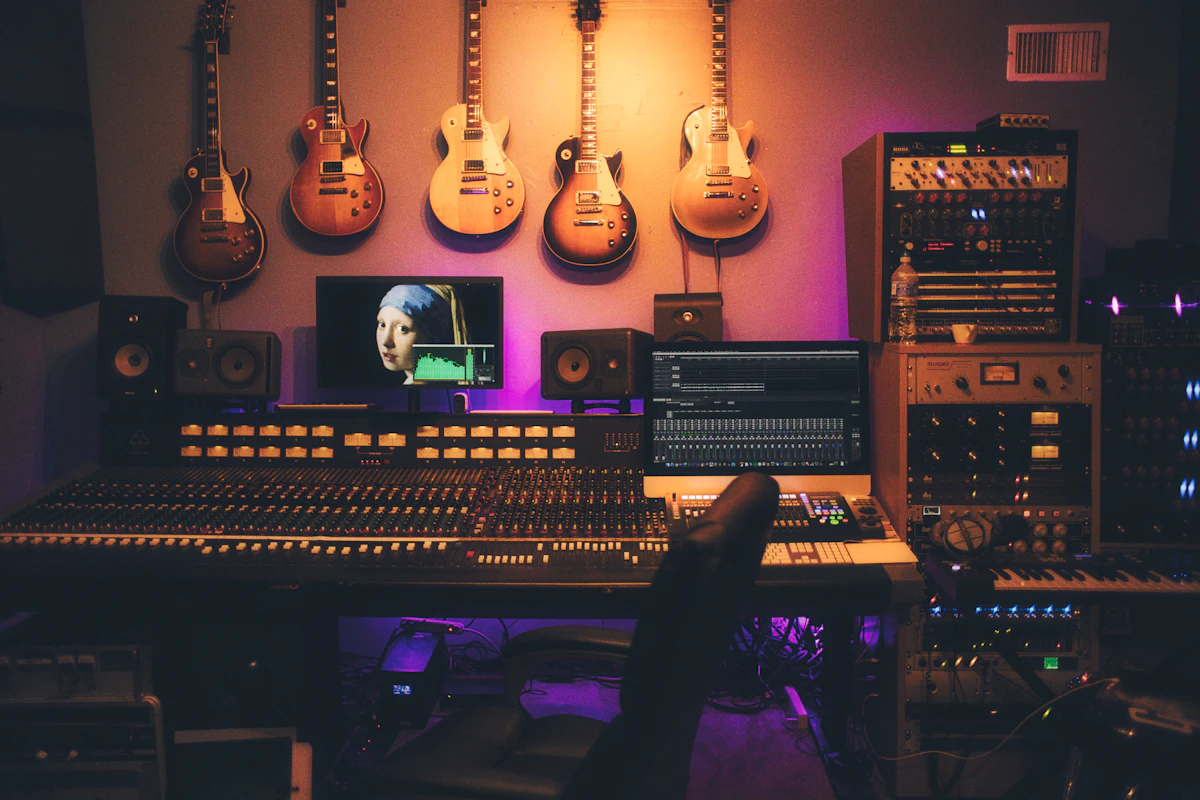
Always record your practice sessions and listen back to them before the next session. Just doing this will feel like it doubles the speed at which a band improves. If you're a band that's just come together, like Membo , and you don't yet know each other's playing habits, the effect is even greater. When you're playing, you can't hear your own sound objectively. When you listen to the recording, you can identify problems like "the tempo is faster than I thought," "the guitar and bass rhythms aren't in sync," or "the vocals are getting buried in the chorus," without anyone pointing them out to you. Problems you notice yourself are easier to fix than problems pointed out by others . This is the greatest benefit of recording.
Recording is as simple as placing your smartphone in the center of the room (a little distance from the drums). Once you're finished, share it with the group immediately and agree that everyone should listen to it at least twice before the next session. As you accumulate recordings, you'll also get the added bonus of increased motivation, as you can compare them to recordings from three months ago and see your progress.
How to decide on practice frequency — "Twice a month" is a realistic solution for bands with working adults.
The frequency of practice is determined by balancing the members' lifestyles and their level of commitment. For student bands, once a week is possible, but in my experience , twice a month is the most sustainable for bands mainly composed of working adults. If it's once a month, people tend to forget what they learned last time, and each practice session starts with a "recall time." Once a week is a high burden on scheduling, and members start to drop out, making it easy for the band to fall apart. If you decide on twice a month on fixed days (e.g., the second and fourth Sundays at noon), it's easier for everyone to plan their schedules, and attendance rates become more stable. The reason why Membo 's recruitment posts often specify the frequency of activity, such as "twice a month on weekends," is because finding the right frequency is crucial to the lifespan of a band.
Additionally, setting loose intermediate goals, such as "a mini-recital at the studio in three months" or "a gig at a live music venue in six months," can add motivation to practice. Practices by bands without goals tend to become monotonous. Furthermore, once you reach the stage of performing cover songs in front of an audience, it's a good idea to check the basics of copyright on the JASRAC website. Many live music venues have blanket agreements with JASRAC, so performers often don't need to go through individual procedures, but it doesn't hurt to have this knowledge.
Adding members or changing the lineup should also be included as an option for the "next" step.
After the first rehearsal, desires for further instrumentation naturally arise, such as "This song would be even better with a keyboardist" or "We need another backing vocalist." This is a sign that the band is moving forward. Additional members can be found using Membo , just like when the band was formed. With Membo , you can search by specifying the part, such as "keyboard" or "backing vocals," and see posts from prospective members all in one place, making it easy to pinpoint and fill the missing piece. In fact, many bands develop their lineup after their formation, and it's perfectly fine for a band to start with three members and become a five-member group six months later—that kind of growth is also possible.
Communication that prevents departures — speak up when you feel something is wrong.
When bands fall apart, it's usually not for a dramatic reason like musical differences, but rather the accumulation of small grievances such as "late communication about practice schedules," "a disproportionate burden on certain individuals," or "people holding back what they want to say." That's why it's important to create a culture of "speaking up about any discomfort while it's still small" in the early stages of forming a band. Simple measures like setting aside 10 minutes after practice to talk about "what bothered you today," or clearly defining rules (how to settle studio fees, rules for contacting others in case of absence) early on, can be effective.
Even so, members sometimes leave at different points in their lives. A departure doesn't necessarily mean the end of the band. What to do in such a situation is summarized in the complete guide to dealing with a sudden departure of a band member , and you can find a replacement member again on Membo . Membo can search across more than 10 recruitment sites, so it's strong for pinpoint replacements such as "only the guitarist has left" or "we want to add a drummer." The actual search methods are divided by instrument: guitarist , bassist/drummer , vocalist , and keyboardist .
Tips for practicing with foreign members — The language barrier is lowest in the studio.
Membo is a multilingual member search service that supports eive languages, so many people meet foreign musicians and form bands with them. In fact, there are far more foreign musicians looking for bandmates in Japan than you might think, and Membo receives requests and applications from such people every day. And I can confidently say that the language barrier is lowest in the studio . Music itself is a common language, and practice is successful as long as you can communicate "let's start the chorus again."
Things to keep in mind when preparing before practice
In the preparation stage, the key is to avoid relying on nuances in Japanese and instead share factual information such as song title, tempo, key, and date concisely. While Membo 's automatic translation makes recruitment and initial communication smooth, for daily communication, aim for short, clear sentences that are easy to translate into translation apps to make things easier for everyone. Symbol-based materials such as song structure charts (Intro 8 → A → B → Chorus…) are particularly effective because they can be understood regardless of language.
Mini table of studio terminology with English translations.
It's helpful to memorize the translations of commonly used studio terms for easier communication on the day of the event.
| Japanese | English |
|---|---|
| Let's start with the chorus. | Let's start from the chorus |
| Let's start again from the beginning | One more time from the top |
| The tempo is too fast. | We're rushing / speeding up |
| The tempo is slow. | We're dragging |
| Lower/Raise the volume | Turn it down / Turn it up |
| Let me tune it. | Let me tune up |
| After the instrumental break, the song returns to the chorus. | Back to the chorus after the solo |
| Half-step down tuning | Half step down tuning |
| Let's take a break. | Let's take a break |
| That's all for today. | Let's call it a day |
Many Japanese band terms, such as "intro" and "sabi," are Japanese-made English words (in English, "sabi" is called "chorus"), so it's best to clarify the terminology from the start to avoid confusion. The mindset and examples of forming a band with foreign members are detailed in the section on foreigners and Japanese people forming a band . If you're unsure how to approach them initially , the phrasebook for approaching foreign musicians should also be helpful.
Another practical point to note is that you may be asked to show identification when registering as a member at a studio you're using for the first time. It's a good idea to let foreign members know in advance to bring their residence card or passport to ensure a smooth process. These small acts of consideration contribute to building trust and creating a comfortable atmosphere for the band.
I find the differences in time perception and practice culture fascinating.
The perception of "practice" varies surprisingly depending on the country and musical culture. Some people are accustomed to meticulously finishing songs, while others grew up exploring sounds through improvisational sessions. The Japanese studio culture's unique practices of "starting to clean up 10 minutes before the end" and "strict adherence to time" also seem novel to those experiencing it for the first time. I believe these differences should be seen not as discrepancies to be corrected, but as differences that enrich the band's music. In fact, I often hear from people who have formed bands with foreign members they met at Membo that they have come up with arrangement and rhythm ideas that would not have emerged in bands with only Japanese members. Bringing together each other's "norms" is a privilege unique to multinational bands.
FAQ
I'll answer some frequently asked questions about the first band practice based on my own experience.
Q. Should we have a get-together (like a meal) before our first meeting?
If possible, I recommend meeting up beforehand, even briefly. If you go into the studio without having met beforehand, the first 30 minutes tend to be spent in an awkward, "social anxiety" phase. Just meeting once beforehand at a cafe or something and talking about music will make a huge difference on the day of the studio session. If that's difficult due to distance, even a 15-minute video call will be effective. Even if you met through Membo , it's more natural to exchange some information about your musical tastes via message before making plans to meet at the studio.
Q. I've just started playing an instrument, and I'm worried I'll hold everyone back.
The first rehearsal isn't a technical test. What's important is that you can play your part in the assigned song "slowly, but all the way through." Even if it's not perfect, your preparation will definitely come across. Conversely, even skilled players will lose credibility if they skip preparation. If you're worried, it's a good idea to be honest and say "I've been playing an instrument for one year" when you apply. Membo has many positions that welcome beginners, so if expectations align from the start, most of your worries will disappear. To help beginners join a band , we've compiled tips on how beginners can thrive in a band.
Q. What's the smartest way to settle studio rental fees?
The standard practice is to split the bill on the spot when you leave the studio. Most studios only accept cash, so be sure to have some 1000 yen bills and change ready. Paying upfront means the settlement will be delayed, and the amount will pile up, leading to awkwardness. It's a good idea to make "split it on the spot, no carrying over" a rule for your band.
Q. Is it okay to perform an original song from the very first show?
It's fine, but for your first outing, I recommend including one existing song (a cover song). Since everyone knows the song, there's a shared standard for judging whether it "fits," making it easier to check how well the band works together. It's better to bring in original songs from the second outing onwards, once everyone is more familiar with each other's sound, so that the quality of the song can be properly appreciated. If you want to focus on cover songs, please also refer to our guide on how to start a cover band .
Q. How many practice sessions does it usually take for a song to "take shape"?
It depends on the difficulty of the song selection and the experience level of the members, but with simple songs, many bands seem to reach the "minimum level where they can perform in front of an audience" after 2-3 practice sessions, and the "level where they can perform with confidence" after 5-6 sessions. What's important is the cycle rather than the number of sessions; bands that go through the cycle of "practice → listen to the recording → correct during individual practice → next practice" tend to finish quickly. Conversely, without this cycle, the same mistakes will continue to be made in the same places no matter how many times you practice.
Q. I'm worried about noise. What should I do if I can't practice my instrument at home?
Using a studio for individual practice is highly recommended. As mentioned earlier, most studios offer affordable individual practice options. While electric guitar and bass can be practiced at home using headphones, the feel of producing sound through an amplifier and the natural sound of drums can only be developed in a studio. Developing the habit of going to a studio for individual practice even once or twice a month will make sound creation during band practice significantly smoother.
Q. Not all the members are here yet. Should we go into the studio first?
If you have two or more people, it's perfectly fine to join before everyone is fully assembled. For example, even just a guitarist and a drummer is enough to check your rhythm compatibility, and you might even be able to join cheaply with individual practice rates. You can start playing with the people you have while searching for the remaining parts on Membo —this will help the band get started faster. We also publish city-specific guides, such as how to find band members in Nagoya , so please check the news page for articles in your area.
Summary — The key to a successful first practice session is not "doing well," but rather "making people want to get together again."
Finally, let's recap the main points of this article.
- The success of the first rehearsal directly impacts the band's survival —the main goal is to end it with "That was fun, let's do it again." Perfection is secondary.
- Learn the basics of studios —two pricing structures for band practice and individual practice, online booking, and cancellation policies. Choose a room based on location, equipment, and size (number of people x 1.5 tatami mats).
- Preparation is 80% of the job—the assigned songs are narrowed down to 2-3, and the audio and key are shared in advance. Each person finishes their own part. The studio is not a place to practice, but a place to rehearse.
- On the day, plan your schedule accordingly : 15 minutes for setting up, 10 minutes for adjusting the volume, and 20 minutes per song. Play the music continuously without stopping. Always make arrangements for the next session before finishing.
- The volume balance is based on the vocals— "the maximum volume is where the vocals are audible." The amplifier's volume is set to 0 when powered on, and the EQ is set to 12 o'clock.
- Failure is expected —every band goes through the process of not getting through, running ahead, and not being able to manage things properly. The three essential elements are checking the structure, the drummer's standards, and having a designated MC.
- Recording, a consistent frequency, and sharing small feelings of unease —these three habits transform a band into one that "lasts."
- The language barrier is lowest in the studio —practicing with foreign members is perfectly manageable with symbol-based structure charts and translations of basic phrases. Membo 's support for 5 languages is the starting point.
If you're still looking to find all the members you need, try searching for opportunities nationwide on Membo . Membo allows you to search across more than 10 Japanese member recruitment sites and connect with international musicians through its automatic translation into 5 languages. Add it to your smartphone as an app and set up push notifications so you never miss a new recruitment post. For detailed instructions on how to use it, please see Membo's help page , and for information about the operators, please see the operator information section .
Everyone feels a little nervous the first time they open the studio door. But the feeling of "Wow, this is a band!" when the count-in sounds and everyone's sounds come together for the first time is priceless. I hope this article can help make that first note with the friends you've met at Membo a little better. Have a great first rehearsal.
- Search across more than 10 Japanese websites at once
- Automatic translation into 5 languages
- Coverage for all 47 prefectures
- Free to use