Many people who have formed a band find themselves wondering, "How do I find a place to practice?" or "How much does a studio cost?" Especially for beginner bands, even booking a studio can be confusing, with questions like, "What do I need to prepare?" and "Where do I book?" This article provides a comprehensive explanation of everything related to band practice locations, from the types of music studios, typical prices, how to choose one, and how to book, to tips for smart use and a list of things to bring. As a companion article to our complete guide to your first band practice , this article fully covers "where to practice."
Types and characteristics of music studios – where should you practice?
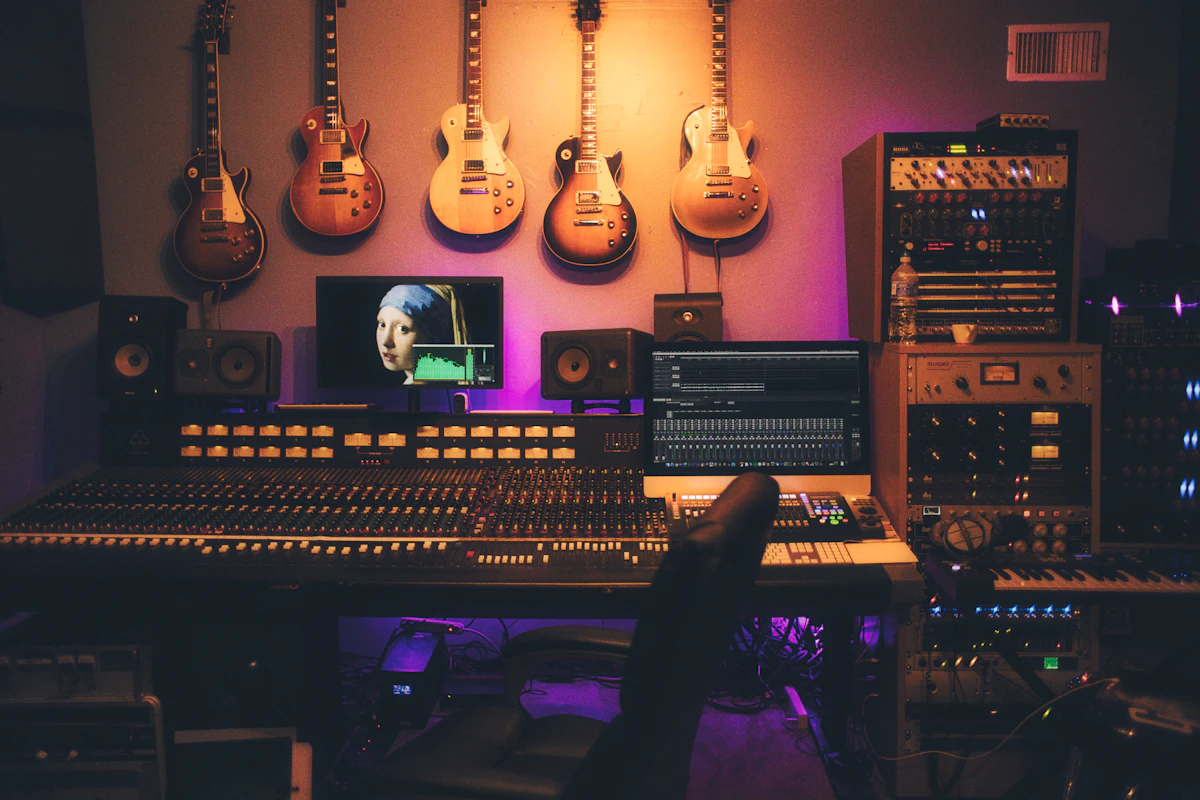
Even though we use the single term "studio," there are several types of spaces that can be used for band practice. Understanding the characteristics of each and choosing a place that suits your purpose is the first step to good band practice.
① A "rehearsal studio" specifically for band practice.
The most common place to practice is a rehearsal studio. These studios are fully equipped with all the necessary band equipment, including drum sets, guitar amps, bass amps, and PA systems, allowing you to practice almost empty-handed, with just your instrument and your own skills.
Studio sizes typically range from 6 to 12 tatami mats, designed to be comfortable for bands of 4 to 6 people. Soundproofing and sound absorption treatments are in place, allowing you to practice at high volume without worrying about disturbing others. Chain studios like SOUND STUDIO NOAH, which are located throughout Japan, primarily in urban areas, feature well-established online booking systems, making them easy for beginners to use.
Rehearsal studios are typically rented out by the hour, with 1 to 3 hours being the most common rental period.
② Individual practice rooms (individual booths) for individual practice
Many studios also have individual practice booths, smaller than band practice rooms. These booths are typically sized for one or two people (around 2-4 tatami mats) and are equipped with guitar or keyboard amplifiers, making them ideal for individual practice or practicing together as a duo.
These practice rooms are cheaper than band practice rooms (around 500-800 yen per hour) and are convenient for quick practice sessions. However, they often don't have drum sets, so if a drummer is participating, a band practice room is necessary.
③ A "recording studio" where you can record.
Recording studios used by professionals to record music may also be available for bands. They are equipped with high-quality recording equipment, soundproofing, microphones, etc., making them suitable for creating demo tracks or recording original songs.
However, compared to regular rehearsal studios, the usage fees are significantly higher (5,000 to tens of thousands of yen per hour), and engineers are often on-site, so they are not suitable as a basic practice space. It is generally used when a band has come together to some extent and wants to record demos.
④ Music classroom studio inside the instrument shop
Many major music stores such as Shimamura Music, Yamano Music, and Ishibashi Music have rental studios attached to their stores. These are convenient for customers who want to have their instruments repaired or purchase strings at the same time, and many are located near train stations.
Many music store-affiliated studios offer discounted rates for members, and sometimes even provide free studio usage vouchers as a perk for purchasing an instrument. Music stores with branches nationwide, such as Shimamura Music , make it easy to use studios in your local area.
⑤ Public facilities: "Music rooms/cultural hall practice rooms"
Some community centers and halls operated by local municipalities have soundproof rooms specifically for music practice. The biggest advantage is that they can be used at a significantly lower cost compared to private studios (around 300 to 1,000 yen per hour).
However, there are many drawbacks, and in reality, there are many restrictions such as "resident registration is required to use it," "reservations are booked up several weeks in advance," "the equipment is limited or old," "the available time slots are limited," and "only electronic instruments are allowed (acoustic drums are not)." It is often inconvenient to use as a primary place for regular practice, so it is best to consider it as a supplementary option.
Based on the experiences of bands that have actually used music rooms in public facilities, the general trends are as follows: "We use it for a monthly self-organized rehearsal event. The equipment is minimal, but the fee is cheap, so it was a lifesaver when we were short on money" (4-piece band in Tokyo), "Booking a room at a city facility is a fierce competition. But when you do get one, it's great value for money. You absolutely must bring your own tuner and cable" (3-piece band in Saitama), "The music room at the community center didn't allow live drums, so we switched to a cajon to practice. You need to check if there are any genre restrictions" (5-piece band in Osaka). Public music rooms are more realistically used irregularly rather than regularly, as a "secondary practice space" when you want to save on studio fees.
You can find music rooms in public facilities by searching with keywords such as "[City/Town Name] Cultural Center Music Room Reservation" or "[City/Town Name] Community Hall Band Practice," or by checking the "Facility Reservation" page on your local government's official website.
⑥ "Self-practice" at home or at a friend's house
Practicing in a soundproofed house or at a friend's house with a basement or garage can be an option in some cases. While there are initial costs for setting up equipment, it may be more cost-effective in the long run. However, due to the risk of noise complaints and soundproofing issues, the practical cases in which this can be used are limited.
When you're just starting out in a band, the smoothest way to begin is to rent a rehearsal studio regularly. As mentioned in our complete guide to practicing in your first band , a rehearsal studio is overwhelmingly the best place to start practicing.
Know the "size classifications" of the studio.
Rehearsal studios are generally managed using size classifications such as "S (Small)," "M (Medium)," and "L (Large)." While size designations vary from studio to studio, you can generally choose based on the following criteria.
- S size (approximately 6 tatami mats) : Standard maximum size is a 4-person band consisting of bass, drums, one guitar, and vocals. It is compact, has a high sound density, and makes it easy to check the ensemble.
- Medium size (approximately 8-10 tatami mats) : Suitable for a 5-person band consisting of 2 guitars, bass, drums, and vocals. It's the most versatile size and is often used as the main practice room for bands.
- Large size (12 tatami mats or larger) : Suitable for large bands including brass and string sections, and for rehearsals with a PA system. Used when you want to conduct sound checks in a space close to the actual performance stage.
When choosing a studio for the first time, it's a good idea to select a room size that's slightly larger than the number of people in your band. This will give you more room for equipment and more flexibility during performances. If the room is too small, sound can echo too much, making monitoring difficult, so it's recommended to try out several different sizes.
Studio pricing and cost estimates
Studio rental fees vary greatly depending on the location, time of day, and studio grade. Here's a general overview of typical rates.
Standard price range for band practice rooms
As of 2026, the following pricing structures are common in rehearsal studios in major metropolitan areas such as Tokyo and Osaka (prices vary depending on room size and equipment grade).
- Weekday daytime (around 10am to 5pm) : Approximately 1,500 to 3,000 yen per hour (Example for a medium-sized studio in central Tokyo: 1,980 to 2,200 yen)
- Weekday evenings and weekends (after 5 PM, all day Saturday and Sunday) : Approximately 2,500 to 4,500 yen per hour (often 3,000 to 4,000 yen during peak hours)
- Regional cities and suburbs : Prices tend to be 20-40% cheaper than in urban areas. Some studios can be rented for as little as 500-1,500 yen.
In major metropolitan areas such as Osaka, Nagoya, and Fukuoka, the price range is generally similar to that of Tokyo. For example, in the Osaka Umeda area, a studio (medium size, as of 2026) typically costs around 2,220 yen during weekday daytime hours and 3,300 to 4,150 yen at night and on weekends. Nagoya and Fukuoka are often 10-20% cheaper than Tokyo and Osaka, and even in urban areas of regional hub cities, studios can be found for around 1,200 to 2,500 yen.
A 2-3 hour band practice session typically costs between 5,000 and 13,500 yen (based on a weekday afternoon, 5-person band, and medium-sized room). Dividing this by the number of members (5), the cost per person is approximately 1,000 to 2,700 yen. If you practice 2-4 times a month, you should budget around 2,000 to 11,000 yen per person per month for studio fees.
What is included in the price / What costs extra
The basic studio fee typically includes the use of the following equipment:
- Drum set (including cymbals)
- Guitar amplifier (the specific model, such as Marshall or Fender, will vary depending on the studio)
- Bass amplifier
- PA system (mixer and speakers)
- Microphone stand
On the other hand, the following items may incur additional costs:
- Equipment rental : Additional charges may apply for specialized equipment not available in the studio (keyboard amplifiers, specific amplifier models, etc.).
- Recording equipment : There is an additional charge of 300 to 1,000 yen per use for renting MTRs or other recording equipment.
- Shield sticks : These are consumables and may be sold or rented separately (they are generally provided free of charge).
- Parking fee : If you came by car to bring in equipment.
Differences between chain studios and local studios
Large chain studios (such as Studio Noah and Studio Musicians) have standardized equipment and systems, making online booking convenient. On the other hand, local, independently owned studios may offer lower rates and be more flexible with booking arrangements for regular customers.
| Chain studios | Independently owned studio | |
|---|---|---|
| Fee | Slightly high (high equipment maintenance costs) | Relatively inexpensive (some cost between 500 and 1,500 yen per hour) |
| equipment | Equipment is standardized and well-maintained. | There are significant differences depending on the studio. |
| reservation | 24-hour online booking available | Reservations are often made primarily by phone. |
| flexibility | Actions taken in accordance with the rules | Regular customers may be given more flexibility regarding time and price. |
| Beginner-friendly | ◎ (The instructions are easy to understand) | △ (It can be difficult to understand how things work if it's your first time.) |
| For experienced players | ○ (The equipment is stable) | ◎ (They are often flexible regarding equipment, fees, and time.) |
For beginner bands, chain studios with easy online booking and well-equipped facilities are convenient. Experienced bands can build regular relationships with local, independently owned studios, enjoying their reasonable rates, flexibility, and friendly atmosphere. It's important to try both and find the studio that best suits your band's style.
Points to note when sharing expenses
Sharing studio fees can sometimes be a source of conflict within a band. It's recommended to establish rules beforehand, such as "divide equally," "members who are absent don't pay," or "always divide by the same number of people."
We have compiled specific settlement scenarios and corresponding procedures.
- If there are absentees : The rule "absentees don't pay" will increase the burden on participants as the number of absences increases. A tiered rule such as "full payment for sudden absences, half price for those who notify in advance" will result in fewer problems.
- If a member joins mid-way through the group : Generally, fees are only incurred from the practice sessions after they join. It's best to avoid retroactively charging them for studio fees incurred before they joined.
- Studio fee advance and collection method : It's common for the organizer to pay on the day and collect later via PayPay, LINE Pay, or bank transfer. It's smoother to ask them to send it via PayPay when they leave. Electronic payment is recommended over cash because it makes unpaid items more visible.
- Automatic monthly payments : Regular practice bands can use a "savings system" where all members transfer a fixed amount each month to a group account (the representative's account), eliminating the need for settlements each time. These funds can be used not only for studio fees but also for equipment purchases and live performance expenses.
Bands with a full lineup often use Membo's recruitment listings to find specific parts, so it's a good idea to discuss how the costs of hiring new members will be shared beforehand.
Keep track of the annual cost of studio rentals.
If you're in a band for a long time, studio fees can add up to a surprisingly large expense. For example, practicing for three hours twice a month for a year can cost tens of thousands of yen per person annually, depending on the rates. Estimating how much studio fees will cost each month before starting a band is the first step to a long-lasting band.
In addition to studio fees, there are also costs for consumables such as strings, sticks, and picks, live performance fees (performance quotas and PA fees), and equipment purchase and repair costs. Having a general understanding of the overall costs involved in band activities beforehand makes it easier to plan your budget. This is especially important for student bands and adult bands resuming their activities; having a realistic understanding of expenses is crucial preparation for continuing to perform.
Choosing a Studio: Location, Facilities, and Equipment

This article explains the key points for choosing the "best studio for your band" from among the many available options. You don't need to find the perfect studio from the start, but understanding the basic requirements will significantly improve the quality of your practice sessions.
Location – Is it a place that is easily accessible to everyone?
One of the most important factors when choosing a studio is its location. No matter how good the facilities are, if it's extremely difficult for any member to access, that member is more likely to miss practice.
Ideally, the studio should be located roughly midway between all members' homes and workplaces. If it's too heavily reliant on being "within walking distance of someone's house," it will place a heavy burden on other members, so be sure to check everyone's accessibility on a map before deciding.
Especially when bringing equipment (amplifiers, drum parts, etc.), the availability of parking and the distance from the station are important factors. Transporting heavy equipment over long distances is physically and mentally taxing.
Studio size – is it suitable for the number of members and their playing style?
The ideal studio size depends on the number of members. Here are some general guidelines:
- For a 3-4 person band : a space of about 6-8 tatami mats is sufficient. It's compact and easy to concentrate in.
- For a 5-6 person band , an 8-12 tatami mat room is comfortable. If there is a horn section, an even larger room will be needed.
- For groups of 7 or more : You will need to choose a studio of 12 tatami mats or larger, or find a studio larger than the "S size".
Practicing in a room that's too small can lead to excessive sound reverberation, making communication between band members difficult. Conversely, if the room is too large, the sound can scatter, making it hard to hear the ensemble. Therefore, choosing a room of just the right size is important.
Equipment – Do you have the equipment that suits your musical style?
What you need in a studio varies depending on the genre of music your band plays.
- Rock/Pop : Marshall and Fender amps are standard. The condition of the drum cymbals should also be checked.
- Jazz/Fusion : Check if they have a good selection of amplifiers that produce clean tones (Fender, Roland, etc.).
- Metal/Hardcore : Check in advance whether they have a high-gain amp (such as a Marshall JCM800).
- Pop/Singer-Songwriter Style : The quality of the PA system (microphone and PA speakers) is crucial.
When using a studio for the first time, make it a habit to check the studio's official website or call them before making a reservation to find out what equipment they have available.
Cleanliness and maintenance status – are the instruments and equipment in good condition?
Because studio equipment is shared among many bands, older studios may have worn drumheads or noisy amplifiers.
When choosing a studio, it's a good idea to visit it in person if possible, or refer to reviews on review sites or recommendations from fellow musicians. It's best to avoid studios that have many reviews mentioning things like "old amplifiers" or "out-of-tune drums."
Operating hours and ease of booking – do they fit our schedule?
For bands comprised of working adults, practice often takes place on weekday evenings or weekends. Studios with extended operating hours until late at night, or those that allow same-day reservations, are convenient for such bands.
Whether a studio has a well-established online booking system and whether it's easy to book from a smartphone are also important criteria when choosing a studio to use long-term.
Reservation methods and points to note - from advance reservations to walk-ins
There are two main ways to book a studio: "advance booking" and "walk-in use." It's important to understand the characteristics and points to note for each.
Web reservation (online reservation)
Many studio chains now have systems in place that allow online reservations through their official websites. The advantages are as follows:
- Reservations can be made 24 hours a day.
- You can check availability in real time.
- You may be able to get a discount by registering as a web member.
- You'll receive a reservation confirmation email, making it easy to manage your schedule.
If you're using the service for the first time, you'll often need to register as a member, but registration usually only takes about 5-10 minutes. Popular studios and weekend evenings fill up quickly, so it's best to book 2-4 weeks in advance of your desired practice date.
Phone reservations
For individual studios that do not have a web reservation system, or for those with special circumstances (such as long-term reservations or large group bookings), telephone reservations are the standard method. The following information is helpful to provide when making a telephone reservation:
- Desired date and time/number of hours
- Band size
- Purpose of use (band practice, individual practice, recording, etc.)
- Requests for special equipment (e.g., need for a keyboard amplifier)
Since phone reservations are only confirmed verbally, misunderstandings about the date and time are common. After making a reservation, always repeat the information back to confirm, such as "So, it's on [Month] [Day] from [Time] for [Number] hours, right?"
Walk-in use (same-day use)
Walk-in use, where you go to the studio on the day without a reservation, is often possible if there is a room available. However, please note the following points:
- It is often fully booked on weekends and at night.
- The room size you want may not be available.
- Some studios charge higher rates than those for advance bookings.
Walk-in use is useful when you suddenly have practice time available or when a reservation is cancelled and a slot suddenly opens up, but it's not suitable for creating a regular practice schedule. Always make a reservation in advance for regular practice sessions.
Important points to note when making a reservation: Be sure to check the cancellation policy.
Most studios have cancellation policies such as "full charge for same-day cancellations" and "half charge for cancellations the day before." It's a good idea to check these policies in advance so you can handle situations smoothly if a member needs to cancel a studio session due to absence.
Especially if you have many band members, you risk incurring cancellation fees later if you don't coordinate everyone's schedules before making a reservation. As mentioned in our complete guide on how to deal with sudden band member departures , disputes over studio fees can affect relationships within the band. It's important to share practice dates and costs with everyone in advance.
First time using a studio—understand the process.
For first-time studio users, the process typically follows these steps:
- Check-in : Please provide your reservation name to check in. You may also need to present your membership card or the reservation confirmation screen on your smartphone.
- Room guidance : A staff member will guide you to your room (especially on your first visit, be sure to check how to use the equipment).
- Equipment check : Check the condition of the amplifiers and drums, and the connections of the microphones. Report any problems to the staff immediately.
- Practice ends and cleanup : Begin cleanup 5 minutes before the scheduled end time. Return equipment to its original state.
- Check out and pay at the reception : Confirm your usage time and pay the fee.
For your first visit, it's a good idea to allow about 15 minutes extra, as you may not be used to the process. If you wish to extend your session, please inform the staff as soon as possible.
Studio etiquette and precautions
Rehearsal studios are shared spaces used by many musicians. It's important to observe the following etiquette for the sake of the next user.
- Punctuality is essential : To avoid exceeding your reserved time, stop playing and begin packing up 5 minutes before the end of your session. This will not inconvenience the next person who has a reservation.
- Treat your equipment with care : Don't carelessly turn amplifiers on and off (tube amplifiers, in particular, require warm-up time). Don't hit drum cymbals too hard.
- Always take your trash with you : Take all your trash, such as plastic drink bottles, snack wrappers, and string packaging, with you, or dispose of it in the trash cans designated by the studio.
- Do not remove equipment : Shields, stands, chairs, etc., are studio equipment. Do not take them outside the room.
- Caution when operating volume knobs at high volumes : Suddenly increasing the volume can damage equipment and your ears. Check that the amplifier volume is set appropriately before playing sound.
Using the service with good manners can improve your relationship with the staff, leading to positive interactions such as easier handling of last-minute reservation changes and the sharing of special offers.
Tips for using a studio cheaply and wisely

Studio fees are a recurring expense for bands. With a little ingenuity, you can save tens of thousands of yen a year, so please try the following tips.
Tip #1: Significant discounts available for weekday daytime use.
Almost all studios offer discounted rates for weekday daytime hours (around 10am to 5pm). It's not uncommon for these rates to be around 500 to 1,000 yen cheaper per hour compared to weekend evenings.
While this is often difficult for bands with working professionals, bands with members who have flexible schedules, such as freelancers, those with shift work, or students, can significantly reduce their annual costs simply by scheduling "one weekday daytime practice session per month."
Tip #2: Make use of membership registration and point cards
Studio chains often offer the following benefits to members:
- Member rates (often 5-15% cheaper than regular rates)
- Points rewards based on the number of uses
- Discounts for regular service use (regular bookings for the same day and time)
- Birthday month service and seasonal discount coupon distribution
If you use multiple studio chains, registering as a member at each one will make it easier to take advantage of discounts.
Tip #3: Make use of "Regular Practice Reservations"
Many studio chains offer a "regular use" or "subscription service" system where you can sign up for regular use, such as "every week on [day of the week] at [time]." This is very convenient for bands that practice regularly, as it is cheaper than regular reservations and eliminates the hassle of making a reservation each time.
However, regular bookings often have cancellation restrictions, so it's best to wait until the band's schedule is somewhat stable before applying.
Tip #4: Make effective use of practice time.
To make the most of your studio time, it's important to use each practice session effectively.
- To complete the setup quickly : Each person should decide on their own setup procedure in advance. Taking a photo of the amplifier settings will make it easier to reproduce them next time.
- Share the songs to be practiced and the goals in advance : Share the practice content with all members beforehand, such as "Today we'll do a full run-through of XX and XX."
- Practice the parts you tend to struggle with beforehand : Practice your individual parts at home so that you can focus on "synchronizing" in the studio.
Our complete guide to your first band practice session provides even more detailed explanations about the practice flow and how to use your time effectively. If you want to make the most of your time in the studio, please refer to it.
Tip #5: If you don't have enough people, switch to a "private practice room".
It's inefficient to keep renting a large band practice room on days when not all members can get together. It's important to either downsize the studio to suit the number of people or cancel the band practice altogether.
On the other hand, partial rehearsals with two or three people (such as just the rhythm section, or just vocals and guitar) can often be done in individual practice rooms, allowing you to improve the precision of those specific parts while keeping costs down.
Tip #6: Compare and use multiple studios.
Using different studios depending on the purpose can also be effective.
- Regular practice → A studio that is inexpensive and close by
- Final rehearsal before the live performance → A studio with excellent equipment, providing an environment similar to the actual performance.
- Recording and demo production → Studio with recording equipment
Band member recruitment services like OURSOUNDS sometimes share local studio information through word of mouth. By joining local band member communities, you can get up-to-date information such as "cost-effective studios" and "studios with excellent equipment."
Tip #7: Utilize the studio's reputation and word-of-mouth.
When using a studio for the first time, it's a good idea to check information from Google Maps reviews and social media posts from music communities before actually going there. Here are some points you should pay particular attention to:
- Equipment condition : Posts mentioning "the drums are out of tune" or "the amps are making a lot of noise" are warning signs.
- Staff Service : Whether the staff are friendly and helpful is a major factor in creating a sense of security for first-time band members.
- Soundproofing performance : Reviews mentioning "sound leaking from the next room" may indicate an environment where it's difficult to concentrate on practicing.
- Cleanliness : The cleanliness and tidiness of the studio reflect the management system of that studio.
Studios with many positive reviews are more likely to become a "home studio" that bands continue to frequent. Finding a studio that your band can always use with peace of mind is one of the keys to improving the quality and consistency of your practice sessions.
A list of items and preparations to make your band practice more productive.
To make the most of your studio practice, it's important to prepare your belongings properly. We've put together a checklist to prevent problems like "I forgot this" or "I'm missing that." Since the necessary items differ depending on the part, please refer to the section for your own part.
Items shared by everyone
- Studio reservation confirmation information : Reservation confirmation email and studio membership card (note this down on your smartphone).
- Tuner : Whether clip-on or pedal-type, be sure to bring a tuner that is compatible with your instrument.
- Smartphone/Audio Source : Make sure you can play the audio of the song you want to copy. A Bluetooth speaker makes it easier for everyone to listen.
- Earplugs/Ear Protectors : Protecting your ears is especially important during long practice sessions at high volume. Music earplugs (such as Etymotic) can reduce the volume while maintaining sound quality.
- Drinks : The studio tends to be dry, so drinks are especially essential for vocalists.
- Writing utensils and notebook : Used for taking notes during practice (e.g., "The tempo here is too fast," "Check the chord in measure X," etc.)
- Studio fee (cash) : While more studios are accepting credit cards, it's a good idea to have cash on hand as well.
Items owned by guitarists and bassists
- Instrument itself : A semi-hard case or better is recommended (for protection against impacts during studio transfers).
- Shielded cables (at least two) : While studios often have them, using your own will reduce the likelihood of problems. Always carry a spare as a precaution.
- Effects board and necessary effects pedals : Not necessary if you're creating your sound using only the studio amp, but bring your own effects pedals if they are essential to your sound.
- Picks (multiple) : Always carry extras. They often get dropped on the studio floor, stepped on, or lost.
- Spare strings : If a string breaks in the studio, practice stops. They are especially essential during rehearsals before a performance.
- AC adapter/battery : Prevents the effects pedal from running out of power. For battery-powered effects pedals, carry new batteries and spares.
Drummer's belongings
- Drumsticks (multiple pairs) : While some studios may have sticks available for rent, it's generally best to practice with your own. Bring at least two pairs.
- Drum shoes : While it's fine to use regular sneakers, drum-specific shoes make it easier to control your feet.
- Hi-hat clutch (if available) : Since the hi-hat stands in the studio are shared, you may want to use your own if you're used to them.
- Snare drum (if you have a preference) : If you don't like the snare drum provided by the studio, many studios allow you to bring your own.
Vocalist's belongings
- Lyric sheet/lyric memo : It may be difficult to read on a smartphone screen, so it's best to print it out or display it on a tablet.
- Microphone (if you have a preference) : Studios usually have microphones available, but many studios allow you to bring your own if you prefer.
- Warm-up drinks (herbal tea, etc.) : Having something to warm your throat will be helpful for warming up before the main event.
A keyboardist's belongings
- Keyboard (if bringing your own) : While some studios have keyboard amplifiers, few have keyboards available. Checking in advance and bringing your own is essential.
- Keyboard amplifier compatible cable : A compatible cable is required when using stereo output.
- Sustain pedal/expression pedal : Often not included with studio keyboard amplifiers.
Useful common items
- Towels and sweat wipes : You sweat especially a lot in the studio during the summer. Drummers especially need them.
- Smartphone recorder for recording : Recording practice sessions allows for later review. Recording band practice sessions and sharing them with everyone makes it easier to identify areas for improvement.
- Small tool kit : screwdriver, wire cutters, etc. Useful for changing strings and making minor equipment adjustments.
The equipment needed for each part is discussed in detail in our complete guides on how to find a guitarist and how to find a bassist/drummer . Please refer to them when searching for band members.
Find members at Membo and start studio practice.

Once you understand how to choose and use a studio, the next thing you need is "members to practice with." Membo is a platform that allows you to search for band, theater, and club member recruitment information from over 10 websites across Japan.
We'll decide on a practice location while gathering the members.
When forming a new band, there's the question of the order in which to proceed: "Should we gather members first and then look for a studio?" or "Should we decide on potential studios first and then recruit members?"
My recommendation is to "list several potential studios while simultaneously recruiting members." While searching for members on Membo's recruitment list , pick out 3 to 5 studios that are close to your desired practice area so you can start practicing quickly once you have gathered members.
Using the studio as a "meeting place"
The studio is not just a place to practice; it also functions as a "meeting place" where new members can play music together for the first time. When you first meet potential members you've found through Membo in the studio, it becomes a trial practice session where you can see if you can make music with that person.
When practicing in the studio with members you're meeting for the first time, keep the following points in mind:
- To ease the tension, start with an easy song : Choosing a pop or standard song that everyone knows can help to relax the atmosphere.
- Natural conversation while making music : "How was that part?" "Let's try playing this part a little slower," etc. Communication facilitates interaction through music.
- Inviting them for tea or a meal after the studio session : It's important to get to know each other through conversations outside of music. Chatting at a cafe near the studio deepens the bond between bandmates.
Key features of Membo
- Search over 10 Japanese websites at once : This allows you to search across multiple member recruitment sites, significantly reducing the time and effort required for your search.
- Automatic translation into 5 languages : Supports Japanese, English, Chinese, Korean, and Traditional Chinese. Can also be used to connect with foreign musicians.
- Covers all 47 prefectures : Easy to search for people living in rural areas as well as urban areas.
- Free to use : All basic functions are available free of charge.
How to deal with situations where a specific part cannot be found
If you're having trouble finding a specific part for your band, the following related articles may be helpful.
- The Complete Guide to Finding a Bassist or Drummer When You Can't Find One
- A complete guide to finding a vocalist when you can't find them.
- The Complete Guide to Finding a Guitarist When You Can't Find One
- The Complete Guide to Finding Keyboardists and Pianists
Also, for those who want to join a band , the "I Want to Join a Band! Complete Guide to Writing a Self-Introduction Statement" will be helpful. Detailed instructions on how to use Membo are provided in the user guide and help page . Please also take advantage of the PWA version , which can be added to your smartphone's home screen.
Points to keep in mind when practicing with foreign musicians
As explained in our complete guide to forming a band with foreigners and Japanese people , language barriers can arise when booking and using studios if foreign members are involved. Choosing a studio that offers English-language support is reassuring when explaining things to studio staff and understanding the terms of use. Many large studio chains in urban areas now have English-speaking staff on-site or provide information in English.
Summary — Those who control the practice space control the band.
We've covered the following points regarding band practice spaces and studio utilization.
- Understanding the different types of studios : Choose a location that suits your purpose, such as a rehearsal studio, individual practice room, in-store studio at a music store, or a public facility.
- Understand the price range : Reduce the cost per person by utilizing weekday daytime hours, membership registration, and regular reservations.
- Choosing based on location, facilities, and equipment : Select a studio that is easily accessible for all members and has equipment that suits your musical style.
- Make reservations as far in advance as possible , especially for weekend evenings. Also, be sure to check the cancellation policy.
- Smart saving : Improve cost-effectiveness by using weekday daytime sessions, registering as a member, using regular sessions, and strategically using different studios.
- Prepare your belongings in advance : Understand the essentials for each part of the event to avoid problems caused by forgetting something.
- Finding members at Membo : The studio is just a "place." Find the members to make music there at Membo.
Choosing and booking a studio is directly related to the continuity of your band's activities. By creating a "convenient studio" and a "cost-effective practice environment," you can increase your motivation to practice and make it easier for your band to last.
Even if your band doesn't have all the members yet, take a look at Membo's recruitment list . Musicians all over the country are waiting for new members. The moment when you and your band can play music together in the studio will surely come.
For general information about band activities, please also see our complete guide to starting a band . If you're having trouble finding a specific part, please also refer to our complete guides on finding a vocalist , guitarist, keyboardist, and what to do when a band member suddenly leaves .
- Search across more than 10 Japanese websites at once
- Automatic translation into 5 languages
- Coverage for all 47 prefectures
- Free to use