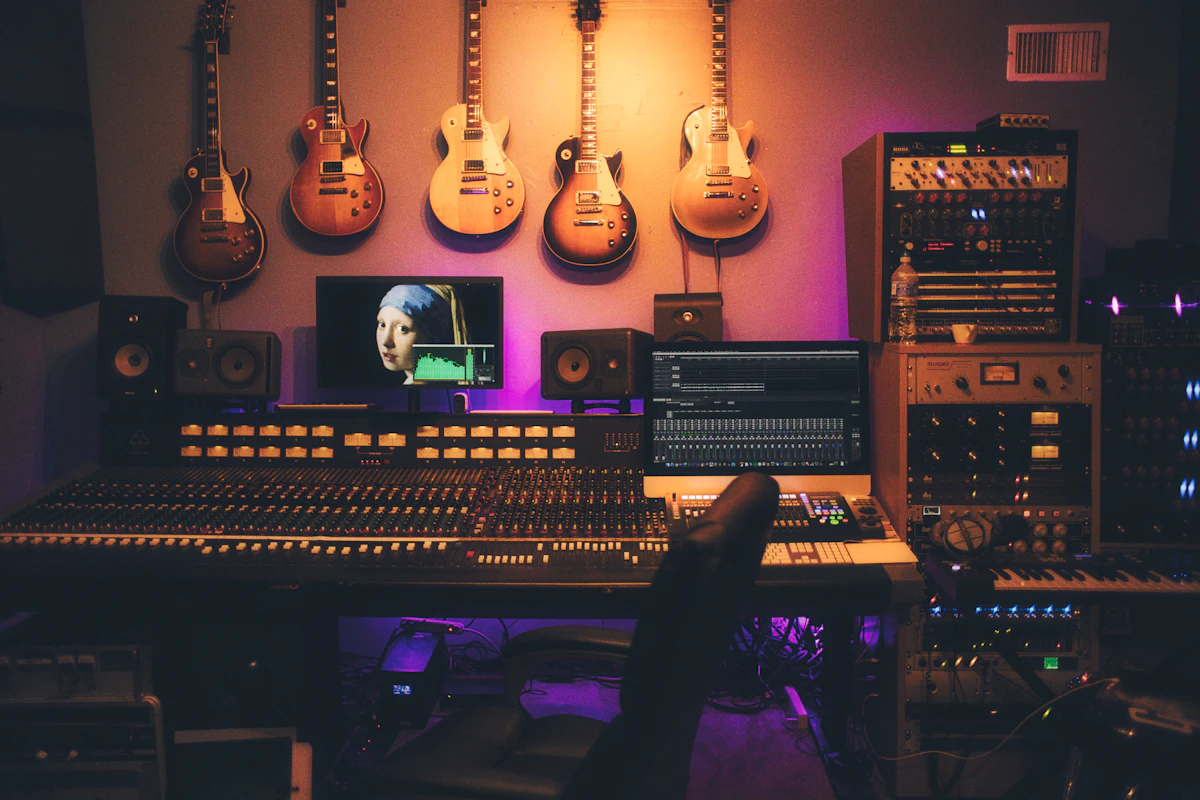
For those of you who have been practicing with your band for a long time, the moment may finally arrive when you decide to "create a recording." Your first recording is a major milestone for your band. If done well, it can be a powerful tool for objectively checking the quality of your performance and for recruiting band members and promoting on social media. On the other hand, it's also true that questions like "What kind of studio should I choose?", "How much will it cost?", and "What should I bring on the day?" will start to pop up one after another.
This article provides a comprehensive guide for those undertaking their first band recording, covering everything from preparation and recording to mixing, mastering, and how to utilize the finished track. We'll offer plenty of practical information, including tips for booking a studio, options for home recording, and even how to use your finished track to recruit band members.
For those looking for band members, the Membo service can be helpful. It allows you to search for band listings from a Japanese website and automatically translates them into eive languages, making it useful for communicating with international band members. We'll go into more detail at the end of this article, but let's start with the basics of recording.
1. The value that the first recording brings to a band
Many bands feel that they're not good enough yet and it's too early to record. However, in reality, recording is one of the most powerful tools for accelerating a band's growth.
You can listen to the performance objectively.
When practicing in a studio, it's easy to focus on your own part and find it difficult to listen to the overall ensemble from a broader perspective. Listening to a recording afterward reveals issues you didn't notice before, such as timing discrepancies, volume balance problems, and pitch inaccuracies. This isn't criticism, but rather a list of specific areas for improvement for your next practice session.
As mentioned in the Complete Guide to Your First Band Practice , self-assessment is essential for improving the quality of your practice. Recording is the best way to do this.
This will be your trump card for recruiting band members.
When looking for new members, the presence or absence of audio recordings, in addition to text and photos, significantly impacts applicant response. Clearly stating "demo recordings available" when posting recruitment notices on services like Membo makes it easier to attract serious members.
Can be used as material for social media posts
With sharing music on Instagram, TikTok, and YouTube becoming commonplace, recording your music is essential for increasing a band's visibility. Releasing your music alongside studio photos allows you to convey the band's authentic activities.

2. Preparation before recording — 90% of the process is decided at this stage.
It's no exaggeration to say that the success or failure of a recording session is largely determined by the preparation before entering the studio. If you go into the studio unprepared, you may end up wasting time and money.
Make sure the song is perfectly finished.
A recording studio is a place to record finished songs. It is strictly forbidden to change arrangements or hesitate about chord progressions while in the studio. Make sure to finalize the arrangement beforehand and that everyone has the same version in mind.
- Setting the tempo : Practice playing along with a click track (metronome). Determine your ideal tempo in BPM.
- Finalize the structure : Ensure everyone understands the structure of the song, which includes an intro, verse A, chorus, and outro.
- Organize the roles of each part : Share what each part plays and when using sheet music or chord charts.
- Set a target number of takes : Decide on a rule such as, "We'll move on to the next take after we've shot this many takes."
Maintenance of musical instruments and equipment
Always make sure your instruments are in the best possible condition before recording.
Guitar/Bass : Change the strings 1-2 days before recording (if you do it on the day, the strings won't be stable and the pitch will be unstable). Check for buzzing at the nut and frets, and make sure the tuning is stable. Repair any switches or potentiometers that cause fret noise or other unwanted noise beforehand.
Drums : Check that the drumheads aren't too old. Tune the snare, bass drum, and toms before recording to check for any unwanted resonance (rattle sounds). Remove any clips or loose bolts that might cause noise during recording.
Keyboard/Synthesizer : Decide on the preset sounds you'll use in advance so you don't get confused on the day. Also, make sure to check the cable connections and MIDI functionality beforehand.
Get used to playing with a click track (metronome).
In studio recordings, you'll often play along to a click track. If you don't get into the habit of playing along to a click track during regular practice, your rhythm will be off during the actual recording. Refer to the "Complete Guide to First-Time Band Practice" and make it a habit to use a click track in every practice session.
3. Types of Studios and How to Choose One
There are three main types of studios that can be used for band recording. It's important to understand the characteristics and costs of each before making your choice.
① Simple recording in a rehearsal studio
The easiest option is to record in the rehearsal studio you normally use for practice. Some studios offer basic recording services, allowing you to record via line out or use their built-in IC recorder for a single take.
Advantages : Low cost (around 2,000-5,000 yen per hour), easy to book, and you can record in a familiar environment.
Disadvantages : Limited sound quality, limited freedom in microphone placement and sound shaping, no support from professional engineers.
As explained in detail in our complete guide to renting a studio , knowing how to choose and utilize a rehearsal studio is crucial knowledge for beginner bands.
② Recording studio
If you're aiming for a professional recording, you should use a recording studio (Wikipedia) . These studios have separate control rooms and recording booths, where engineers will support you in creating the right sound.
Benefits : Top-quality sound, support from professional engineers, and a wide selection of microphones and equipment.
Disadvantages : High cost (10,000 to 30,000 yen per hour, or 100,000 to 300,000 yen or more per day), advance booking required.
For your first recording session, choosing a studio that advertises itself as "suitable for independent artists" or "offers a startup package" can help you save money while gaining valuable experience.
③ Home recording
In recent years, the widespread use of DAWs ( Digital Audio Workstations ) has significantly improved the quality of home recordings. It's now possible to create professional-quality audio at home, especially for tracks using vocals or guitar amp simulators.
Advantages : Significantly reduces costs, allows recording without time constraints, and allows for unlimited retakes.
Disadvantages : Requires initial investment (audio interface, microphone, DAW software), requires a soundproof environment, and takes time to learn.
For a band's first recording, a rehearsal studio or an inexpensive recording studio would be the most practical options. Home recording is something you can learn later.

4. How to research studio reviews and ratings — Finding a suitable place for a beginner band
Once you understand the different types of studios available, the next question is, "Which studio should I actually choose?" There's a lot you can't learn from the official website alone, so it's important to make good use of reviews and ratings at this stage.
How to use Google Maps reviews
Searching for the studio name on Google Maps will allow you to view reviews from actual users. The rating isn't just based on the number of stars, but also on the content of the reviews. Consider the following points:
- References to soundproofing performance : Descriptions such as "You can hear the sounds from next door" and "There is little sound leakage, making it comfortable."
- Equipment condition : "The drums were out of tune," "The microphones were of good quality," etc.
- Staff responsiveness : Are they friendly to beginners? Do they answer questions?
- Ease of booking : Whether last-minute bookings are possible, and mention of the cancellation policy.
Even if there are few reviews, please check the most recent posts. Reviews from several years ago may not reflect the current situation.
Gather real-life experiences through social media searches.
If you search on X or Instagram using keywords like "[studio name] recording" or "[studio name] band," you can sometimes find posts from bands that have actually recorded there. Many indie bands post activity reports like "We recorded at [studio name] today," and you can get a sense of their reputation by following the hashtags.
Also, when you're looking for a studio, checking Membo 's listings page can be helpful, as the names of studios that local bands list in their activity area can be useful. Studios that are frequently used by bands in the same area are likely to be convenient and easy to use.
For your first visit, take advantage of tours and trial sessions.
Many recording studios offer tours and trial sessions before a formal booking. This allows you to actually enter the booth, check the acoustics, and talk to the engineers, helping you determine if the studio's atmosphere suits your needs. Booking a recording studio without a tour is particularly risky, especially since they tend to be expensive.
A network of fellow band members is also a powerful source of information. Searching for bands in the same area on Membo's recruitment list and asking them about studios via social media is an effective method. Studios recommended by bands in the same musical genre tend to be a good fit in terms of acoustics.
5. Studio booking and the process on the day of your visit
Tips for booking a studio
When booking a recording studio, keeping the following points in mind will help ensure a smooth experience on the day of your booking.
Please confirm this in advance.
- Number of songs and recording time : Please specify details such as, "I want to record 3 songs in 4 hours."
- List of available equipment : Check for the availability of microphones, amplifiers, and drum sets.
- Whether or not an engineer is present : If there are plans that include an engineer and plans that are self-operational, choose according to your needs.
- Availability of mixing and mastering services : Check if you can request editing services after recording.
- Loading and unloading time : Check if preparation and cleanup time is included before and after the scheduled time.
For beginner bands, the golden rule is to "book with plenty of time to spare."
Recording in an unfamiliar environment takes more time than you might imagine. If you want to record two songs, be sure to allocate at least 4-5 hours. Especially on your first recording, it's normal to spend 1-2 hours on setup and test recordings.
List of items to bring on the day
- Instrument body, strap, pick, stick, etc.
- Spare strings (essential)
- Tuners, capos, and other accessories
- Effects pedalboard and power strip
- Headphones (for monitoring)
- Copies of lyrics, chord charts, and sheet music (one copy for each person)
- Reference audio for songs to be recorded (playable on a smartphone)
- Drinks and light snacks (if the stay is long)
Schedule management for the day
Once I enter the studio, the first thing I do is check the overall schedule.
- Setup and Tuning (30-60 minutes): Setting up and adjusting the sound of the amplifiers, drums, and microphones.
- Rehearsal Take (30 minutes): Play each song through and check the balance.
- Main recording (1-2 hours per song): Record until you are satisfied.
- Completion check (15-30 minutes): Listen to all takes again and decide which takes to use.
- Cleaning up and data transfer (30 minutes)
Sharing schedules with all band members and discussing how to use time in advance will reduce confusion on the day of the event.
5. Recording Methods — The Difference Between Single-Take Recording and Multi-Take Recording
There are two main approaches to recording: "single take recording" and "multi-track recording (overdubbing)."
One-take recording (live recording)
This method involves all band members playing simultaneously and recording the sound exactly as it is. It captures the live feel and the band's unity in the recording.
Suitable situations :
- I want to preserve the atmosphere of the live performance.
- Time is limited
- Simple recording in a rehearsal studio
- Producing demo recordings for indie bands
Note : One person's mistake will affect the entire take. This is best suited for bands with a solid drum and bass section.
Multi-track recording
This method involves recording each part separately and then mixing them later. Many professional recordings are created using this technique.
The typical recording order is as follows:
- Record the drums first (the foundation of the overall rhythm).
- Record the bass (to match the drums)
- Record guitar, keyboard, etc.
- The vocals were recorded last.
- Add chorus, percussion, etc.
Suitable situations :
- I want to be particular about sound quality.
- I want to finish each part carefully.
- When using a recording studio
- EP/Album Production
For your first recording session, a realistic approach is to first record in one take to check the overall sound of the band, and then move on to multi-track recording as the next step.
6. Basic Knowledge of Microphone Techniques
The sound quality of a recording is greatly affected by the microphone placement (how the microphones are positioned). In studios with an engineer, this is often left to them, but having basic knowledge will make giving instructions and checking the recordings much smoother.
Types of microphones
Microphones (Wikipedia) can be broadly divided into dynamic microphones and condenser microphones.
- Dynamic microphones (e.g., SHURE SM57, SM58): Robust, easy to handle, and suitable for recording guitar amps and snare drums.
- Condenser microphone : Capable of capturing even the most subtle sounds. Used for vocals, acoustic guitar, and as an overhead microphone.
Examples of microphone placement for each instrument
Guitar amp : The basic technique is to use an SM57 microphone, positioned close to the edge of the speaker cone. The sound will change depending on the distance and angle.
Drums : The basic setup includes an SM57 for the snare drum, a kick microphone for the bass drum, a small dynamic microphone for the toms, and two overhead condenser microphones for the cymbals.
Vocals : Use a condenser microphone and record at a distance of 15-30cm from your mouth. Be sure to use a pop filter (a screen to prevent popping sounds).

7. Fundamentals of Mixing and Mastering
Once recording is complete, the next steps are mixing and mastering. This is where the final quality of the audio track is greatly affected.
What is a mix?
Mixing (Wikipedia) is the process of adjusting the volume, sound quality, panning (left/right position), and effects of multiple recorded tracks to create a single musical work.
The main tasks involved in mixing:
- Level adjustment : Adjusts the volume balance of each instrument.
- EQ (Equalizer) : Adjusts the frequency characteristics of sound to make it easier to hear different instruments even when they are mixed together.
- Compressor : Controls the dynamics of sound volume.
- Reverb and Delay : Spatial effects that add breadth and depth to the sound.
- Panning : Placing each instrument to the left and right to create a stereo effect.
What is mastering?
Mastering (Wikipedia) is the process of applying final touches to a mixed audio track. Its main purposes are adjusting the loudness and unifying the volume balance when multiple tracks are played together.
Streaming services like Spotify and Apple Music have recommended loudness standards, and by matching these standards during mastering, your tracks will blend seamlessly with other songs in a playlist.
How to choose DAW software
If you want to try mixing and mastering your own music, you will need to purchase a DAW (Digital Audio Workstation) .
| DAW name | Supported OS | Features |
|---|---|---|
| Cubase (Steinberg) | Windows / Mac | Popular among professional users. Features a comprehensive score editor. |
| Logic Pro (Apple) | Mac / iPad | Mac-only. High cost-performance ratio and popular with beginners. |
| Ableton Live | Windows / Mac | Strong in live performances. Suitable for loop-based production. |
| Pro Tools ( Wikipedia ) | Windows / Mac | Industry standard. Also used in movies and broadcasting. |
For beginners, Logic Pro (for Mac users) or Cubase Elements (for Windows users) are recommended as entry points. The free GarageBand (for Mac) and Cakewalk by BandLab are also feature-rich and ideal for taking your first steps.
What is the going rate when hiring a professional?
The following are estimated costs for hiring a professional engineer to mix and master your music (as of 2024):
- Mix (1 song) : 20,000 to 100,000 yen
- Mastering (per song) : 5,000 to 30,000 yen
- Mix + Mastering Set (1 song) : ¥25,000 - ¥120,000
The price varies greatly depending on the experience of the engineer you hire and the studio. You can also reduce costs by using music-specific crowdsourcing services or hiring freelance engineers who are active on social media.
Additionally, specialized media outlets such as Sound On Sound publish numerous mixing tips from professional engineers, which can be very helpful.
8. Practical tips for improving the quality of audio sources
Understanding sampling rate and bit depth
When recording, be mindful of the sampling rate (Wikipedia) and bit depth.
- Sampling rates : 44.1kHz (CD quality) or 48kHz (for video) are common. Another method involves recording at a high resolution such as 96kHz and then downsampling the final output to 44.1kHz.
- Bit depth : 24-bit is recommended during recording. Final output is 16-bit (CD) or 24-bit (streaming service).
Ensure headroom
When recording, avoid turning the volume up too high and always leave some "headroom" (spacing). It's common practice to adjust the track peak to around -6dBfs. Clipped audio cannot be corrected later.
Prepare a reference track.
Importing a reference track—a song that represents the sound you want to achieve—into your DAW and comparing it to your own mix while working will help you visualize the final result more concretely.
Check using multiple monitors.
Even if something sounds good on studio monitor speakers, it can sound completely different when listened to on a smartphone speaker or with earphones. Always perform "check monitoring" to compare and confirm the sound in various environments.
9. How to use the completed audio files
Use this to recruit band members
Once your music is complete, use it to recruit band members. When posting a recruitment ad on Membo , including a link to your music or stating "demo available" will improve the quality of applications.
- If you are looking for a drummer : Please refer to the tips on how to find a bassist or drummer when you can't find one.
- If you're looking for a guitarist : It's also helpful to read about how to find a guitarist when you can't find one.
- If you are looking for a vocalist : This guide will help you find what to do when you can't find a vocalist.
- If you're looking for a keyboardist : Check out our complete guide to finding a keyboardist.
- Looking for a violinist or strings player? This is helpful when you can't find a violinist or strings player.
Membo allows you to search across multiple Japanese band member recruitment websites, so you can find many candidates with a single search. It also features automatic translation into 5 languages, making it possible to session with foreign musicians. Please also refer to our complete guide to forming bands with foreigners and Japanese musicians .
Promotion on social media
Here are some ideas for using sound sources to post on social media.
- YouTube / YouTube Shorts : Posting videos combining footage of the studio recording process with the finished audio.
- Instagram Reels / TikTok : Post short clips of memorable parts such as the chorus.
- SoundCloud / Bandcamp : You can publish your music for free and share streaming links on social media.
- Distribution to Spotify/Apple Music : Using distribution services such as TuneCore and DistroKid, you can distribute your music to streaming services starting from just a few thousand yen.
Use in live performances
The finished audio can also be used for live promotion.
- Posting audio clips along with live performance announcements on social media.
- Send it to the booking manager at the live music venue (as a demo tape)
- Produced as merchandise for sale on the day of the live performance (independent CDs can be pressed in small quantities, starting from 5-10 copies).
10. Taking the band to the next step — strengthening the lineup
Creating recordings conveys the band's "seriousness" and makes it easier to attract people who want to work with them. Now is a good time to reconsider the band's lineup.
We're looking for new members through music production.
"After experiencing recording, I realized I really want to add percussion," or "I want to add string arrangements," etc. New sound visions can emerge through the process of creating music. Let's explore new members at Membo with that vision in mind.
For musicians looking to join a band, completed recordings are crucial information for judging "what kind of music this band plays." Including a link to your recordings on your recruitment page will help attract applicants with a good musical fit. The "I want to join a band! Complete guide to writing a self-introduction " is also helpful from the perspective of someone hoping to join a band.
How to post a job opening on Membo
Membo's recruitment list displays band member recruitment information from all over Japan. If you would like to post recruitment information for your own band, please refer to the posting instructions page . If you have any questions, you can also check the help page .
The features of Membo are as follows:
- Search across 10+ Japanese websites at once : Eliminates the hassle of checking multiple sites one by one.
- Automatic translation into 5 languages : Japanese, English, Chinese (Simplified and Traditional), and Korean.
- Available in all 47 prefectures : Find local musicians
- Free to use : No registration fee required.
It supports PWA (Progressive Web App) for a comfortable user experience on smartphones, and can be used like an app when added to the home screen. The latest information can also be found on the news page .

11. Tips for reducing recording costs
Many bands want to keep costs down for their first recording session. Here are some tips to maximize cost-effectiveness.
Weekday daytime reservations
Most recording studios charge higher rates on weekends, holidays, and evenings. If you can book during weekday daytime hours, you can secure longer sessions for the same budget. Find a weekday that works for all your band members and take advantage of it.
Thorough preparation ensures no studio time is wasted.
Most studio fees are based on "time." If you spend too much time tuning or adjusting the sound, the cost will increase. Read a complete guide to renting a studio beforehand and visualize how things will go on the day.
Consider self-operation without engineers.
If someone in your band has knowledge of DAWs, self-recording without an engineer becomes an option. While this significantly reduces costs, it may compromise sound quality and efficiency. It's wise to record in a studio with an engineer for the first one or two times to learn how it works before transitioning to self-recording.
Clearly define the priority of the sound sources.
If you're using it as a demo track, a slight drop in sound quality is acceptable. If you're uploading it to social media, a certain level of quality is necessary. If you're selling it as a CD, professional mixing and mastering are required. Determine the scale of your investment based on your intended use.
12. Data management and storage methods after recording
Recording data is a band's valuable asset. If not managed properly, it can be accidentally deleted, or it can be lost when the data is needed later.
Establish a file naming convention.
Please organize the data you receive from the studio on the same day. A recommended folder structure is as follows:
バンド名_YYYYMMDD/(Example: MyBand_20240315/)-
└ RAW/(Recorded raw data) -
└ MIX/(Pre-mixed file) -
└ MASTER/(Mastered, final version) -
└ EXPORT/(Export for SNS and streaming)
Including the song title, take number, and date in the filename will make it easier to manage later. Example: SongTitle_Take3_20240315.wav
Always back up your data in multiple locations.
Hard drives will inevitably fail. The question isn't "it will fail someday," but "when it will fail." You should back up your data in at least the following three locations.
- External HDD (1st) : Main backup for home storage.
- External HDD (second drive) : Disaster recovery backup stored in a different location (such as a friend's house or workplace).
- Cloud storage : Online backup services such as Google Drive, Dropbox, and iCloud Drive.
The mastered, finished files are especially important. Take every precaution and ensure you have a robust storage system in place.
The default format for saving is WAV.
Save your finished audio in uncompressed WAV format (or lossless FLAC format) rather than MP3. If you need to remix or edit later, compressed files will degrade in sound quality. MP3/AAC files for social media and streaming should be converted from WAV and saved separately.
Save the project file along with it.
Be sure to save your DAW project files (such as Cubase's .cpr files or Logic Pro's .logicx files). Having the project files allows you to modify or remix them later. However, be aware of plugin compatibility issues when opening project files on a different PC.
13. Scheduling and budgeting for music production
To ensure a successful first recording session, a well-planned schedule and budget are essential.
How to create a realistic schedule
Here's a rough schedule for recording and completing 1-3 songs as a band (assuming the main work is done on weekends).
| phase | Work details | Estimated period |
|---|---|---|
| Preparation Phase | Finalize song arrangement, maintain instruments, practice click track. | 2-4 weeks |
| Studio recording | Record in the order of drums → bass → guitar → vocals. | 1-2 days (8-16 hours) |
| mix | Hiring a professional: 1-2 weeks / Doing it yourself: 1-4 weeks | 1-4 weeks |
| Mastering | Hiring a professional: 3-7 days / Doing it yourself: a few days to a week | 3 days to 1 week |
| Confirmation and correction | We will all listen together and request revisions as needed. | 1-2 weeks |
| Release and distribution | Social media disclosure, streaming distribution application | 1-2 weeks |
Instead of aiming for perfection from the start, if you approach it with the intention of recording "the best you can do with your current abilities," the pressure will decrease and you'll be able to make a better recording.
Budget breakdown and prioritization
When recording within a limited budget, consider where you should allocate your funds.
- Top priority: The quality of the recording itself —cutting too much on studio and engineer fees can have irreversible consequences later. Invest in the recording, which is the foundation of the sound source.
- Runner-up: Mixing — The finished product by a professional mix engineer is vastly different from an amateur mix. It is recommended to have a professional mix at least your first song to learn the "standard of a finished product."
- Decision required: Mastering — If the goal is to release the music for free on platforms like SoundCloud, basic mastering in a DAW is sufficient. If you plan to stream the music or press a CD, consider hiring a professional.
If the band members are sharing the expenses, be sure to clearly define the maximum cost and each person's share beforehand. Many problems in musical activities stem from financial issues.
Utilization of grants and subsidies
You may be able to take advantage of grants and subsidies offered by local governments and music promotion organizations. For example, some cities and towns have programs that subsidize the music production costs for young artists. It's a good idea to inquire with the cultural promotion department in your area or with local live music venues.
Common mistakes and solutions
I can't get clicks.
Problem : I can't keep up with the click track, and the tempo fluctuates.
Solution : Continue using a metronome during your regular practice sessions. Start at a slow tempo and gradually increase it to your target tempo. If it's too difficult, you can try recording the first part in one take.
We took too many takes and it became unmanageable.
Problem : You run out of time because you keep saying "one more time."
Solution : Set a rule beforehand such as "maximum of ○ takes per song." After recording 3-5 takes, always listen back and choose the best one to move on. Not being too much of a perfectionist is key to a successful first recording.
The vocalist is nervous and can't sing well.
Problem : The vocalist may not be able to perform at their best in the unfamiliar environment of a studio.
Solutions : Vocalists are often alone in the recording booth, which can lead to feelings of isolation and tension. Members in the control room should continuously offer encouragement through the microphone. Singing songs by their favorite artists as a warm-up before the actual performance is also effective.
The volume is too low / too high
Problem : Incorrect input gain settings result in distorted sound or recordings with insufficient volume.
Countermeasures : Always perform a "level check" before recording to ensure the meters are within the appropriate range before starting a take. If an engineer is present, always have them check the levels.
The atmosphere of the session becomes unpleasant.
Problem : As we repeat takes, fatigue accumulates, and the atmosphere within the band becomes tense.
Solutions : Recording in a studio is mentally and physically draining. Take frequent breaks and have snacks and drinks ready. It's also effective to designate a leader to provide positive encouragement and prevent an atmosphere where only certain members are blamed. Additionally, genuinely praising each other for good takes will help maintain everyone's motivation.
Forgetting to handle copyright issues for audio sources
Problem : Failing to properly handle copyright issues when recording and releasing cover songs can lead to problems later on.
Countermeasures : If you record cover songs and release them on social media or streaming services, you may need to apply to a copyright management organization (such as JASRAC). Even when using royalty-free music, be sure to check the terms of use. For original music, it is recommended to agree on copyright ownership among band members in advance.
15. Advice for beginner bands from a professional recording engineer.
Many recording engineers unanimously emphasize the importance of preparation. Time spent in the studio is extremely valuable, and insufficient preparation directly translates to wasted money. Here, we've compiled some commonly heard advice from professionals.
"We're not copying the performance, we're recording the music."
When it comes to recording, many bands are said to become stiff and rigid in their efforts to achieve a "perfect performance." The microphone captures even your musicality. Rather than fearing technical mistakes, prioritize recording the energy and emotion of the song. A little bit of imperfection enriches the music, adding a touch of "humanity."
"Take your time to get used to the monitoring environment."
The sound from studio monitor speakers and headphones can be completely different from what you normally use. Before rushing through multiple takes, take some time to get used to the monitoring environment. Don't hesitate to ask the engineer to adjust the monitor balance.
"The drums determine everything."
In multi-track recording, drum recording is the most important. If the drum track is shaky, it will be difficult to synchronize the timing of all the parts built on top of it. Conversely, if the drums are solid, the other parts will naturally stabilize just by building upon them. Make sure the drummer prepares especially carefully.
As mentioned in our article on how to find a bassist or drummer , drummers are the backbone of a band. This is true even when recording.
"Expressing the meaning of the lyrics through physical movement"
When recording vocals, it's important not only to be technically accurate, but also to express the meaning and emotion of the lyrics with your whole body. Instead of singing towards the control room, sing as if you're immersed in the world of the song. Closing your eyes and imagining the scene from the song can also be effective.
16. To the band that has finished recording — What's next?
Having successfully completed their first recording session, the band now has the next step waiting for them.
The completed audio recording will receive an objective evaluation.
Once you've finished recording your music, have a trusted third party (a music-savvy acquaintance, staff at a live music venue you frequent, etc.) listen to it and ask for their honest feedback. They might point out things you wouldn't have noticed on your own.
Clearly define the challenges for the next recording session.
Let's all listen to the recorded audio together and create a list of things we want to improve next time. If there are specific issues, we can change our approach starting from the next practice session.
- Rhythmic stability relative to clicks
- Volume balance of each part
- Vocal pitch stability
- The sense of unity in the ensemble
- Directions for sound design (timbre creation)
Accelerating activities in conjunction with live performances
Once your music is ready, actively apply to book gigs at live music venues. Many venues require music samples when you apply to perform. Having a finished recording is the best way to convey your musical style to the booking manager.
Combining recordings and live performances will create a synergistic effect, increasing the band's recognition and skill level. And when looking for new members, please utilize Membo . Having completed recordings will significantly increase the persuasiveness of your recruitment efforts.
17. Use Membo to recruit band members and expand your recording network.
Once you've created some amazing music, let's use it to create new connections. Membo is a platform for everyone looking for band members.
Here are some tips for using audio recordings in your recruitment efforts on Membo :
- Clearly state "Demo tracks available" in the recruitment notice and include links to SoundCloud or YouTube.
- Explain specifically what genre you are aiming for and what kind of music you have completed.
- If prior recording experience is a requirement, please include that information as well.
- Clearly state your activity pace and goals (e.g., one live performance per month, one EP release per year).
With Membo , you can find musicians across Japan who meet your criteria. New listings are added daily to the recruitment page , increasing your chances of finding the right members for your band.
Membo also welcomes international musicians. With support for eive languages, collaboration transcends language barriers, allowing you to take your first step towards international band activities. For more details, please see our complete guide to forming bands with both Japanese and international musicians .
For tips on writing a self-introduction and finding a band to join, please also refer to "I Want to Join a Band! A Complete Guide to Writing a Self-Introduction ."
summary
Recording for the first time as a band can be nerve-wracking, but that experience will greatly help your band grow. Let's summarize the points we've discussed in this article once again.
- Preparation is 90% of the battle : Finalize the song arrangements and get the instruments in top condition before entering the studio.
- Studio selection depends on your purpose : a rehearsal studio for demo recordings, and a recording studio for professional-level recordings.
- Allow plenty of time : The first session will take longer than you expect. Schedule with ample time to spare.
- Knowing the basics of microphone technique will lead to smoother communication with engineers.
- Mixing and mastering are also important : Post-production, not just recording, determines the final result.
- Actively utilize completed audio tracks : Use them for social media promotion, member recruitment, and live performance announcements.
Once the music is complete, try recruiting band members on Membo . Having the music as "proof" will make conversations with prospective musicians more concrete and make it easier to find members with a good musical fit.
Expand your circle of musicians and move on to your next recording and your next live performance. Membo will support you in taking that first step.
- Search across more than 10 Japanese websites at once
- Automatic translation into 5 languages
- Coverage for all 47 prefectures
- Free to use