"I want to do it again"——That feeling is everything

A song drifts through the train car. It's that song you used to cover back in your student days. Your fingers unconsciously move to press down on the frets. "I want to play in a band again"——I bet you've had that moment too.
I was in a band in my 20s with Mandala in Kichijoji as my home base. I also played at UZU in Fukushima. But I stepped away to make a living. I worked as a store manager at an indie record shop in Harajuku, and stayed close to music, but I never stood on stage myself.
When I hit 50, I couldn't hold back anymore. I applied to member recruitment posts everywhere. There were many encounters. Some didn't work out. But I have zero regrets about taking action that day when I thought "one more time."
I'm writing this article for people in their 40s and 50s who are thinking the same way——"I want to do it again." It doesn't matter if the gap is 10 or 20 years. All you need to start is that feeling.
A 10, 20-year gap: What has changed?
Let me be honest. After 10 or 20 years away, the music scene, equipment, and practice environments have changed quite a bit. But some things haven't changed. Let's first organize the reality.
What has changed
| Category | Then (2000s) | Now (2026) |
|---|---|---|
| Finding members | Bulletin boards at music stores, magazines | Apps, SNS, Membo for nationwide searches |
| Studio reservations | Phone reservations only | Web reservations standard, more solo practice options |
| Equipment | Tube amps were the standard | Digital amps and multi-effects processors are high quality |
| Practice | You had to gather at the studio | Headphone amps at home, online sessions available |
| Recording | MTR, studio recording | High-quality recording with just a smartphone |
| Information sharing | Fax, phone calls | LINE, Slack, cloud sharing |
What hasn't changed
- The rush you feel when you enter the studio——That feeling of the kick drum vibrating through your belly is the same after 20 years
- The pleasure when everything comes together——The moment scattered sounds become one. Nothing can replace that
- The bond with your bandmates——The connection forged through music deepens with age
- The tension and release of live performances——That tight feeling in your stomach before taking the stage. The exhilaration after it's over
Technology has evolved. But the essence of music hasn't changed. In fact, finding members and practice environments are much more convenient than they used to be. For people with a break, that's a tailwind.
Physical stamina and technique: Facing the reality of aging

Let me be honest here. When you restart in your 40s or 50s, you'll definitely notice changes in your physical stamina and technique.
Physical stamina
- Drummer: The biggest impact. After 2 hours of studio practice, your arms are exhausted. The first month is a battle with muscle soreness
- Bassist: You'll notice a loss of grip strength in your left hand. Songs where you keep holding down root notes for long stretches will be tough
- Guitarist: Your fingertips have thinner skin. Pressing down on strings will hurt. You get used to it in a week, but it's rough at first
- Vocalist: Your vocal range may have narrowed. Especially the high notes. But your lower register might develop more character
Technique
Here's the surprising part: your body remembers. Even after 10 years away, when you pick up a guitar, your fingers automatically move to play the phrases you used to play all the time. It's not starting from zero. The "memory in your body" is stronger than you think.
However, the memory of "I used to play better than this" is a trap. When you compare yourself to your peak in your 20s, you get discouraged. Don't compare yourself to "old you." Compare yourself to "you from last week." You'll gradually get back to where you were. That's enough.
Solutions
| Challenge | Solution |
|---|---|
| Loss of finger and arm strength | 30 minutes a day for the first month is enough. Overdoing it can cause tendonitis |
| Lack of stamina | Start with 1 hour at the studio. Don't do full 2-hour sessions until a month in |
| Dull sense of rhythm | Use a free metronome app for 5 minutes daily. It comes back surprisingly fast |
| Hearing decline | Set up a good monitoring environment. Consider an in-ear monitor system |
| Vision deterioration | Print sheet music larger. A tablet music stand is convenient |
For a full overview of the costs involved in band activities, check out The Real Cost of Band Activities. It's reassuring to understand the monthly budget before you restart.
Where to start: Your comeback roadmap
Once you've decided you want to do it again, take it step by step before you actually start making music with a band. Don't rush.
Step 1: Touch an instrument (1-2 weeks)
Pull your instrument out of the closet. If the strings are rusty, replace them. Download a tuner app on your phone and just start making sounds. It's okay if you can't play well. The act of "making sounds" itself is what switches you on.
If you no longer have an instrument, you don't need to buy an expensive one right away. A used instrument from a secondhand shop or a marketplace app for 20,000-30,000 yen is plenty. Once you're sure you're serious, you can upgrade.
Step 2: Get your feel back with solo practice (2-4 weeks)
You can practice at home, but I recommend using a practice studio for solo practice. Go into a studio alone and send sound through an amp. Experiencing "your own sound reverberating in the space"—something you can't get from headphones—will instantly boost your motivation.
The cost is around 500-800 yen per hour. Even if you go 4 times a month, it's under 3,000 yen.
Step 3: Find bandmates (do this in parallel)
Start looking for bandmates while you're in Step 2. Don't wait until you're perfect. Writing honestly that you're "currently practicing" makes it easier to find people in the same situation.
As I'll explain in detail later, Membo lets you filter by age group and genre, making it easy to find the right members for you.
Step 4: Your first band rehearsal (1-2 months later)
Your first rehearsal together will be nerve-wracking. But don't worry. Everyone feels the same way. It would actually be strange if everything came together perfectly right away. What matters is whether you think "I want to do this with these people again." Technique comes later.
Step 5: Regular practice sessions (2-4 times a month)
If the rehearsal goes well, start regular practice sessions twice a month. For people in their 40s and 50s, don't overdo it. Even twice a month, if you keep it up for half a year, you'll be amazed at how it all comes together.
Once your rehearsals start to sound good, try aiming for a live house stage. How to Get a Live House Gig shows beginner-friendly routes to performance.
Finding bandmates: Options for your 40s and 50s

To be honest, finding bandmates is the toughest part. But you have far more options than you used to.
1. Use member recruitment services
With services like Membo, you can search member postings across the entire country. You can filter by age group, genre, location, and instrument, so you can efficiently find posts like "40s welcome" or "gaps okay."
Tips for writing your recruitment post:
- Be honest about how many years you've been away (hiding it creates gaps later)
- Mention specific artists you like (matching musical taste is most important)
- State your preferred activity frequency (twice a month, weekends, etc.)
- Be clear about your stance ("want to keep it fun," "not aiming for pro," etc.)
2. Social media band communities
X (formerly Twitter) and Facebook have communities like "bands in their 40s" or "old guys' bands." You're more likely to find people your age. The downside is location doesn't always match.
3. Music store and studio bulletin boards
The old-fashioned way still works for finding local members. In some regions, particularly rural ones, bulletin boards at local shops are still active.
4. Music lessons and workshops
More music schools are now offering courses like "Adult Band Experience" or "Ensemble Courses." You can brush up on technique and find bandmates at the same time. Island Guitar and Yamaha's adult programs operate nationwide.
5. Reach out to people you know
This often gets overlooked, but try contacting old bandmates or music friends from your school days. Someone might be thinking the same thing. If you're connected on SNS, a simple "Want to start a band again?" might just get the ball rolling.
For details on demand by instrument and recruitment status, see The Reality of Drummer Shortage and Recruitment by Part.
Making time for practice: Balancing work and family
For people in their 40s and 50s, the biggest hurdle to playing in a band isn't technique or finding members. It's time.
Realistic ways to find time
| Method | Details |
|---|---|
| Morning practice | 30 minutes before work. Solo practice at home with a headphone amp. While the family is still asleep |
| Lunch break | Solo practice at a studio near work. Weekday afternoons are surprisingly quiet |
| Commute time | Rhythm training apps, ear training with recordings (headphones) |
| Early weekend mornings | 2 hours before the family wakes up. Prime practice time |
| Weeknight studio | Twice a week, 2 hours after work. Help your family understand it's "hobby time" |
Getting your family on board
This is unique to people in their 40s and 50s. You'll do better announcing boldly that you're restarting your band than sneaking around.
- Be specific about "when and what" ("Tuesday and Saturday mornings only," etc.)
- Show that family plans come first (sports days and parent-teacher conferences beat band)
- Invite them to your shows (more family supporters appear)
- Be transparent about costs (set a limit like "under 10,000 yen a month")
In my experience, even if they're skeptical at first, seeing you come home happy keeps happening, and they'll gradually become supporters.
Do you need to replace your equipment? Your options in 2026
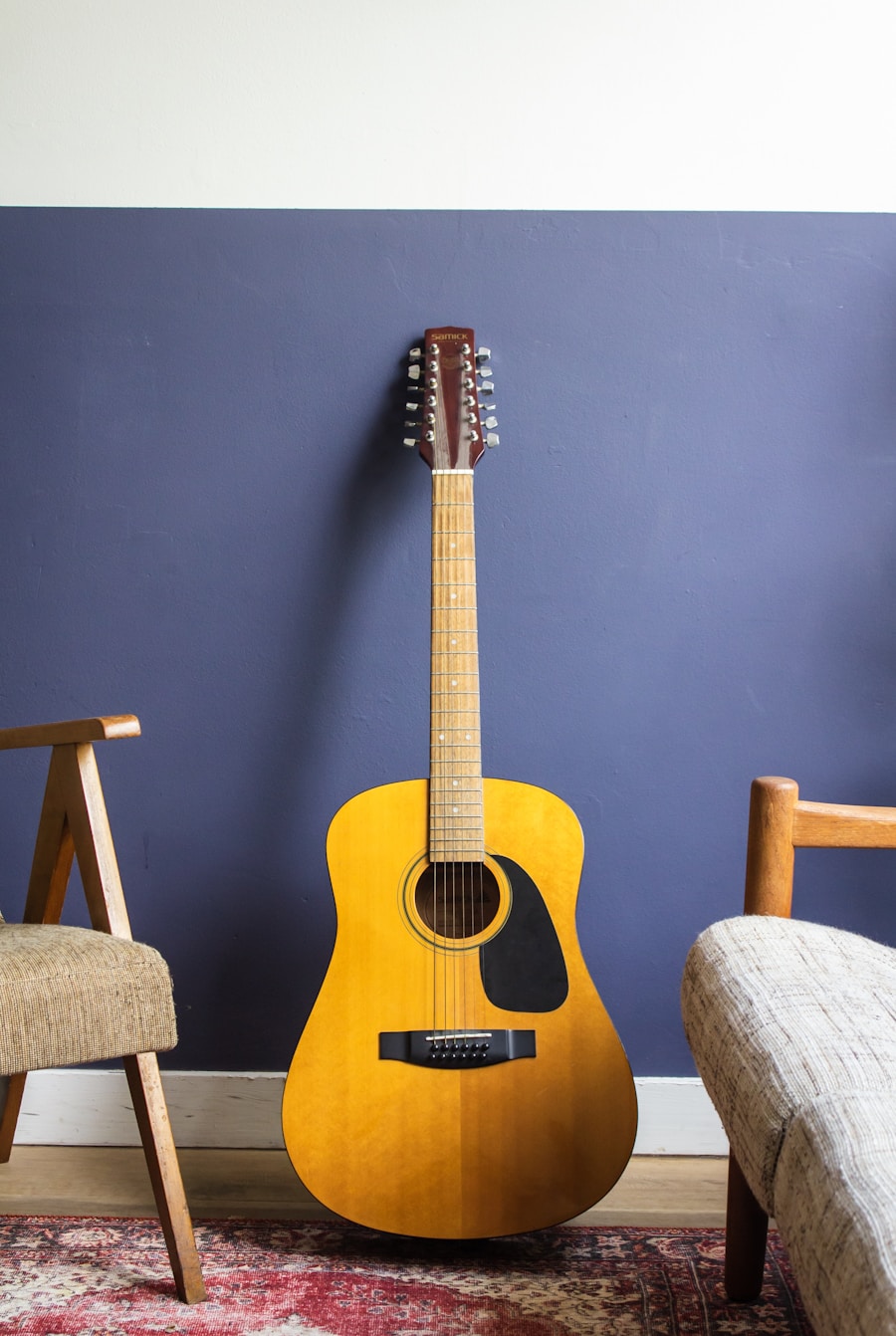
"What do I do about equipment?" is a big concern for people restarting. Bottom line: start with what you have, and buy only what you need.
If you still have your instruments
- Electric guitar and bass: Check the neck for warping. Usually you can use them after replacing the strings. If frets are severely worn, refrets are needed (10,000-30,000 yen)
- Amplifier: If you have a small amp at home, it's fine. Studios have amps set up
- Drumsticks: Buy new ones. Around 1,000 yen. The grip feel matters
- Effects: Check they work and use them as-is. Multi-effects processors in 2026 are amazingly advanced, but don't rush to buy new ones
Budget if you no longer have instruments
| Instrument | Minimum budget | Contents |
|---|---|---|
| Guitar | 30,000-50,000 yen | Used electric + cable + tuner + headphone amp |
| Bass | 30,000-50,000 yen | Used bass + cable + tuner + headphone amp |
| Drums | 10,000-30,000 yen | Sticks + practice pad + metronome (use studio drums) |
| Vocal | 10,000-20,000 yen | Personal mic (like SM58) + vocal training materials |
| Keyboard | 30,000-70,000 yen | Used 61-key synth + sustain pedal + stand |
You don't need to spend over 100,000 yen upfront. When you're not sure you'll stick with it, invest minimally. If you keep going for six months, reward yourself with better equipment.
Once your band is complete, it's time for a band name. If you're starting fresh, check out How to Choose a Band Name.
Summary: There's no such thing as starting too late

Restarting a band in your 40s or 50s is not unusual. Rather, this age group has sounds that only they can produce. The raw energy of your 20s is different from the music shaped by life experience. That's something you could never have made when you were young.
I restarted in my 50s, and I'm really glad I did. I want to keep doing sessions and bands where nationality, gender, and age don't matter—where one sound connects everyone—for the rest of my life. That feeling hasn't changed since my 20s.
Comeback checklist
- Pull out your instrument (or buy a cheap used one)
- Replace the strings and tune it
- Practice 30 minutes a day for 2 weeks
- Solo practice at a studio
- Find bandmates on Membo (write honestly that you have a gap)
- Tell your family
- Enjoy your first band rehearsal
"I want to do it again"—if you have that feeling, all that's left is to act. A gap of 10 or 20 years doesn't matter. The moment you touch the strings, something comes back to life. I guarantee it.
On Membo, you can search for members by age, genre, and location. There are many posts that say "40s welcome" and "gaps okay." Why not find your bandmates today?