
My Band Life Started with a Cover Band
In my twenties, or maybe even my teens—I still remember the day I entered a studio for the first time. I'm not sure if we played Beatles with the members back then, or maybe it was a song by the Japanese band Tulip that one of our friends loved. The moment the guitar riff of the intro rang out, the drums and bass layered in, and my guitar became part of the band's sound. That feeling of "the sound coming together" is the origin point of my band life, even after all these decades.
Cover bands are sometimes dismissed as "just playing other people's songs." But once you actually try it, you understand. Pursuing "perfect copies" of original songs is the best teaching material for honing instrumental technique, ensemble skills, and sound design.
According to the 2021 Ministry of Internal Affairs and Communications "Survey on Social Life," Japan's musical instrument-playing population is about 10.2% of those aged 10 and older—approximately 11.4 million people. The majority experience a cover band first. This article provides a thorough guide to starting a cover band, from song selection through studio practice, copyright knowledge, and your first live performance.
What is a Cover Band? — Differences Between Cover Bands and Tribute Bands
Let me clarify the terminology first. "Cover band" (コピーバンド) is actually Japanese English and doesn't work overseas. In English-speaking countries, "cover band" is the standard term.
| Type | Characteristics | Examples |
|---|---|---|
| Cover Band | Faithfully reproduces the original song without arrangement. "Perfect copy" is the ultimate goal. Japanese English term. | School festival bands, adult amateur music circles |
| Cover Band | Takes the original as a base and adds their own arrangements. Common term in English-speaking countries. | Jazz arrangements, acoustic versions |
| Tribute Band | Aims for comprehensive recreation including performance, costumes, MC, and staging | Queen, Beatles, X JAPAN tributes |
In Japan, "cover band" is the most widely used term. It's established in live house event names like "Copiban Fest" and "Copiban Festival." This article will use "cover band" consistently.
Five Song Selection Tips — Song Choice Determines 80% of Your Success
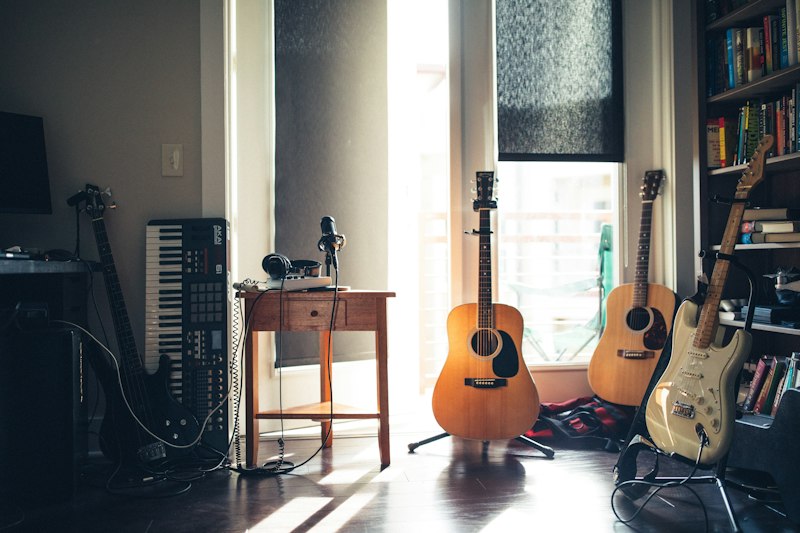
The biggest conflict in cover bands is song selection. Get this wrong and practice becomes painful, and members quit. Here are five tips I've learned from experience.
1. Choose Songs Everyone Knows
If one person pushes an obscure song they like, the motivation of other members drops. Start with songs everyone can hum along to. Mrs. GREEN APPLE's "Kessera Sera" and "Lilac" won the Record Awards three consecutive years (2025), ranking first in TV airplay data, so there's a high chance everyone knows them.
2. Check the Difficulty Balance Among Each Part
Even if the guitar solo is technically demanding, if drums and bass are basic eighth notes, the overall difficulty is manageable. Conversely, if all parts are highly difficult, you'll easily get discouraged. The key is to set the difficulty level so the least skilled person can enjoy playing.
3. Adjust to the Vocalist's Range
If the original key is too high or low, transpose it. However, changing the key changes how guitars are fretted and the bass line, so decide this early on.
4. Include Songs That Energize Live Audiences
Consider not just rehearsal but eventually performing at a live house. Including one or two songs where audiences can clap along or sing the chorus during performances will make your stage significantly more enjoyable.
5. Use the Security of Classic Songs
For your first band, choosing "classic" songs is actually the right call. The table below is a list of classic cover songs for beginners entering a band.
| Artist | Song Title | Why Recommended |
|---|---|---|
| MONGOL800 | Chiisana Koi no Uta | Primarily power chords, bass root notes, drums in eighth-note pattern. The ultimate beginner band classic |
| BUMP OF CHICKEN | Tentai Kansoku | Guitar and drum parts are relatively simple. An impressive intro that builds energy |
| Spitz | Sora mo Toberuha zu | Primarily eighth-note pattern. Slower tempo makes it easier to lock in |
| ASIAN KUNG-FU GENERATION | Rewrite | Has driving energy and builds excitement at live shows. Simple guitar riffs are easy to memorize |
| Official Hige Dandism | Pretender | A modern band staple. Vocal difficulty is high but transposing down solves that |
Finding Band Members — Don't Struggle Alone
If you're worried about not finding band members, try expanding where you look. Here are the main ways to find cover band members.
Join Music Circles
In Tokyo, "Tsunageto" has 2,329 band-related circle registrations, while "Touban" (Tokyo Adult Amateur Music Circle) has 90% of participants joining solo. "Scramble Point Tokyo" runs three types: J-POP covers, jam sessions, and covers, so you can choose your preferred style.
The advantage of circles is that even if you come alone, you won't feel out of place.Everyone's there for the same purpose, making it easy to say "we're recruiting members."
Use Recruitment Sites and Apps
Sites like Membo let you search by area, instrument, and genre. If you want to form an international band, Membo offers real-time translation chat in eive languages.
Workplace or School Bulletin Boards
For adult bands, company intranet bulletins or club activity boards can be surprisingly effective. Matching practice locations and schedules becomes much easier.
Efficient Studio Practice Methods — Don't Waste Three Hours
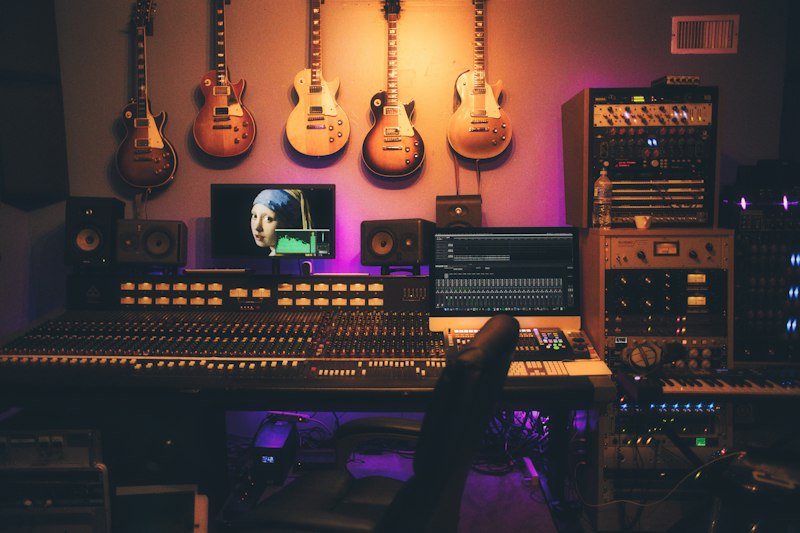
How to choose a practice studio is explained in detail in another article, but here I'll cover the efficient flow once you're in the studio. Studio rental typically costs 1,800–3,000 yen per hour for band practice, or 400–880 yen per person per hour for solo practice (see money for band activities for details).
Ideal Flow for Three-Hour Practice
| Time | Activity | Tips |
|---|---|---|
| First 30 minutes | Setup + sound check + light warm-up | Set volume balance here. Use drums as reference |
| 30 minutes–1 hour | Full run-through (play setlist straight through) | Don't stop—keep going even if you mess up. Mistakes don't matter |
| 1–2 hours | Section practice (focus on problem areas) | Concentrate on intros, bridges, outros—places that tend to fall apart |
| 2–2.5 hours | Full run-through again (check improvements) | Record on your phone if possible. Listening back reveals what you missed |
| Final 30 minutes | New song arrangements + confirm next session goals + cleanup | Share individual practice points for next time with everyone |
The biggest tip is "don't do solo practice in the studio."Perfect your own part at home, then come to the studio for ensemble work. Solo practice time (400–880 yen) is where you develop individually.
Ear Copying and Tab Tools — Partner with Technology
Essential for cover band practice are "ear copying" (learning songs by ear) and sheet music. Recent AI advances have created powerful tools.
| Tool Name | Main Features | Price |
|---|---|---|
| YAMAHA Extrack | AI source separation + chord analysis + chord diagram display + tempo/key transposition (released March 2025) | Free (5 songs/month) / ¥900/month |
| Moises | AI source separation (vocals/guitar/bass/drums). Particularly accurate bass separation | Free (limited) / ~¥600/month |
| Purint Gakufu (Yamaha) | Official band score downloads | ¥108+ per song |
| @ELISE | Out-of-print scores available digitally. Strong selection of rare songs | ¥110+ per song |
| Piascore | Digital score store with 300,000+ songs. Optimized for iPad viewing | Free–varies by song |
I especially recommend YAMAHA Extrack. Released in March 2025, this app uses AI to separate a song into each part and automatically analyzes chord progressions. It even displays chord diagrams, making ear copying much more accessible for beginners. The first five songs per month are free, so try it.
Moises is especially popular with bassists.Bass lines are hard to hear in original recordings, but Moises can isolate just the bass. This dramatically improves ear copying efficiency.
Copyright Considerations — Is a Cover Band Legal?
When starting a cover band, copyright questions always come up. The answer: in most cases, there's no problem.But understanding the system correctly is important.
Live House Performances — JASRAC is Your Ally
Most Japanese live houses have "blanket agreements" with JASRAC. Under this agreement, performers can play JASRAC-managed songs without worrying about copyright fees. The live house pays the copyright fee; performers have zero financial responsibility.
After each performance, the live house reports the setlist to JASRAC, ensuring original artists receive proper compensation.
School Festival and Cultural Festival Performances
Under Article 38 of Japan's Copyright Law, you can perform songs without permission if three conditions are met: non-profit, unpaid, and free admission.School festivals and cultural festivals typically qualify.
Cases Requiring Caution
Rarely, some live houses prohibit cover songs, likely because they don't have blanket JASRAC agreements. It's best to avoid such venues. Also, uploading recordings of your performances to YouTube requires separate licensing.
Perform Live — Cover Band-Only Events Are Your Gateway
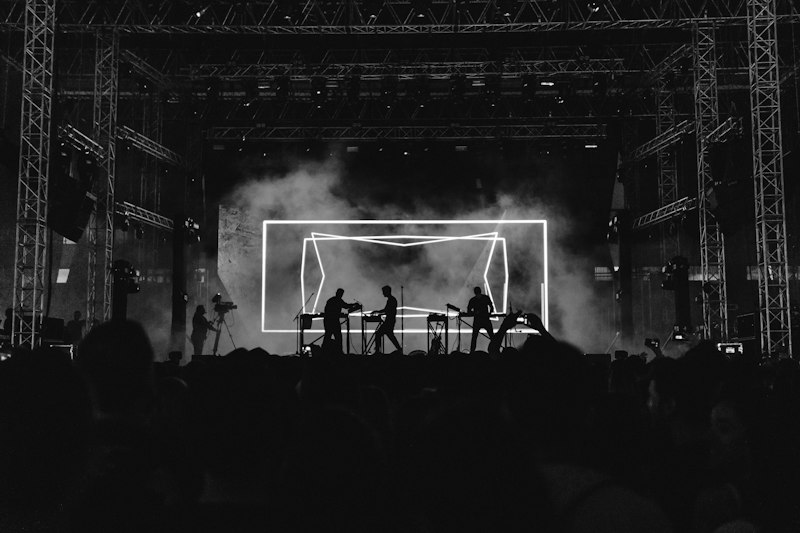
Once you've practiced enough, it's time to perform at a live house. Solo shows can feel intimidating, but cover band-only events are perfect for beginners.
| Event Name | Characteristics | Schedule |
|---|---|---|
| Studio Penta "Copiban Fest" | Explicitly welcomes beginners and older bands. Friendly atmosphere | Last Sunday of every month |
| Seasonal Copiban Festival | Participants range from teens to 60s. Events vary in size | Regular shows in spring, summer, fall, winter |
| Copiban Matsuri | Held at famous live houses like Shibuya La.mama and Shimokitazawa Shelter | Irregular (check each venue's schedule) |
The beauty of cover band-only events is that all performers share one thing: they're playing other people's songs.At original music events, bands are judged on "song quality," but at copiban festivals, the criteria shift to "great song choice" and "incredible accuracy."
Three tips for your first show: limit yourself to 3–4 songs (longer sets drain your focus), keep MC brief (just state your band name and next song), and show you're having fun (audiences miss half the technical mistakes anyway).
A Musical Life That Begins with a Cover Band

I started with a cover band in my twenties, discovered roots music like Blues and Soul, found joy in covering, and eventually made my own LP. Today, I prefer thinking of what I do as "covering" more than "covering," but covering was where it all began. The ear, sense of rhythm, and ability to sync with bandmates that I developed through cover bands became the foundation of my entire musical life.
A cover band is both an entry point and a form of music you can enjoy your whole life. Playing songs you love with friends. There's nothing simpler, and nothing more fun.
If you haven't found members yet, try finding band members on Membo. You can search by area, instrument, and genre, so you'll definitely find the right fit. Now, book that studio.