table of contents
1. What you realize when you search for "I want to be a bassist"
If you search for "how to become a bassist," you'll notice something a little strange. While there are many articles explaining "how bands find bassists," there are surprisingly few articles written from the perspective of "someone who wants to become a bassist." Our blog has previously published articles on the reasons why bands can't find bassists and solutions, as well as a complete guide on how to find bassists and drummers when you can't find them , but these have all been from the perspective of "how bands find bassists." This article, however, is written from the other side—from your own perspective, "I want to start playing bass and be able to play in a band."
This shift in perspective pattern has been covered in previous articles I've published, such as "How to Become a Keyboardist" and "How to Become a Drummer ." I believe that information about instruments and bands only comes full circle when both articles from the recruiting side and articles from the aspiring side are included. Among these, the bass is a particularly unique part, as it's often "hard to notice that you're playing it." Because it's not very noticeable, it tends to be underestimated, but in reality, it plays a very important role in supporting the band's rhythm and chord progressions simultaneously, all by itself. In this article, I will explain as concretely as possible a roadmap for complete beginners to start learning bass on their own, and how to determine "at what level you need to be able to play in a band."
Membo , the service we operate, allows you to search across information from multiple Japanese band member recruitment sites. When you look at the recruitment conditions gathered there, you'll notice that there are surprisingly many phrases like "Experienced bassists welcome" and "Beginners welcome, we want to teach you the basics together." In other words, once you've followed the roadmap outlined in this article, there are far more entry points available to you than you might imagine.
2. An overview of the roles and equipment you should know before starting to play bass.
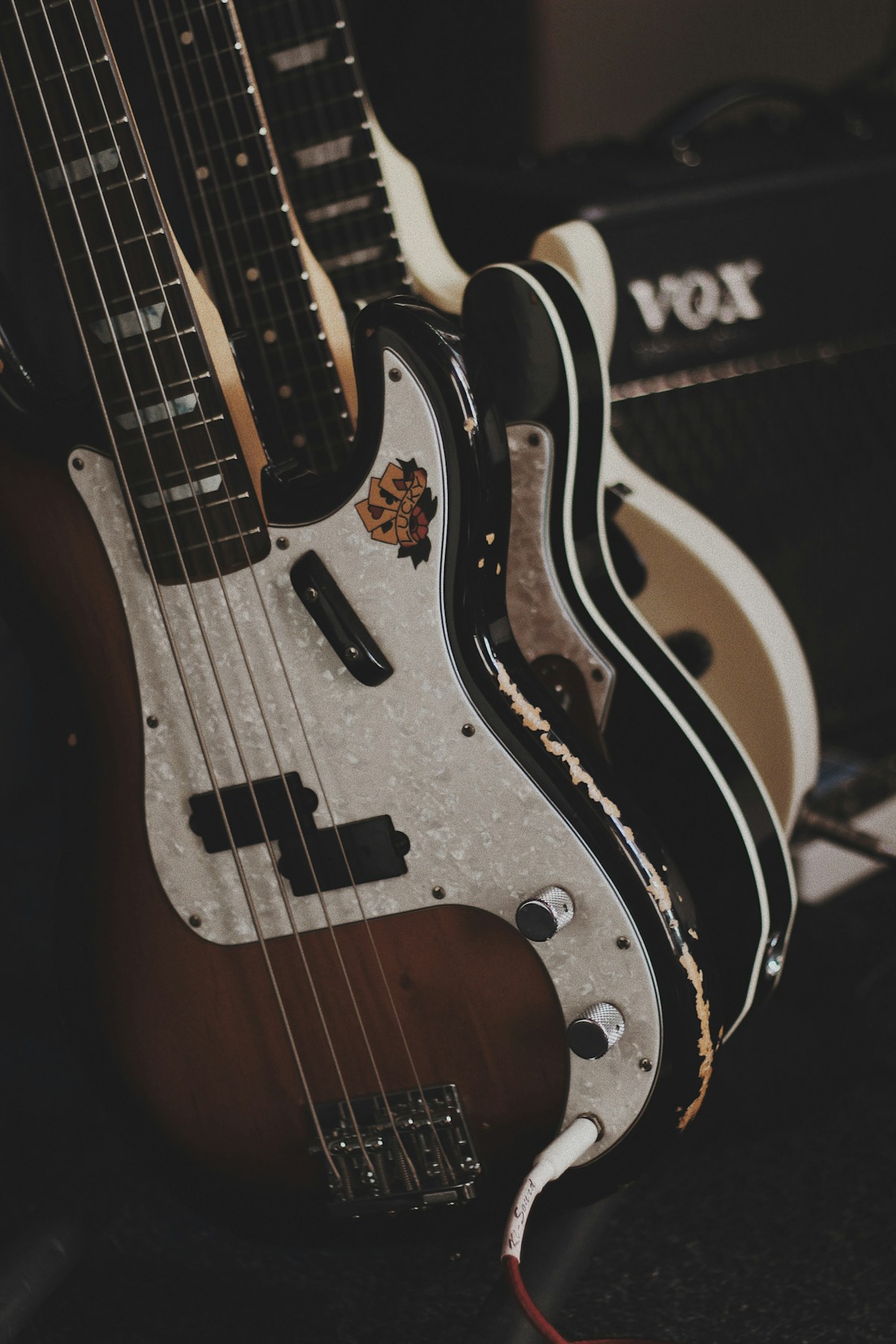
Before you begin learning on your own, the first thing you need to understand is the role of the bass guitar itself. The electric bass is a plucked string instrument that provides the low end of the sound, and since Fender released its first mass-produced fretted model in 1951, it has become an indispensable part of modern band sounds. If the guitar is the instrument that colors a song with chords and melodies, the bass is the instrument that supports the chord progression of a song, note by note, while breathing in harmony with the kick and snare drums. It may not stand out in a flashy way, but you will notice that the moment the bass is absent, the center of gravity of the entire band disappears. Grasping this sense of "supporting" role early on will eliminate confusion when you practice on your own.
In terms of equipment, there are several options for the bass guitar.
| musical instrument | Features | Main role in the band |
|---|---|---|
| Precision Bass | Released in 1951, it features a single split-coil pickup, producing a thick, deep sound. | A foundation for a wide range of genres including rock, punk, and pop. |
| Jazz bass | Released in 1960, it features two pickups, one in the front and one in the back, offering a wide range of tones. | Funk fusion, delicate ensemble |
| Active Bass | It has a built-in preamplifier and offers a wide range of volume and tone adjustments. | Slap bass techniques and modern band sounds |
One of the most common dilemmas when choosing your first bass is whether to pick a Precision Bass or a Jazz Bass. The differences between the two, categorized by price range, tonal characteristics, and suitable genres, can be summarized as follows:
| Comparison items | Precision Bass | Jazz bass |
|---|---|---|
| Price range guideline (new items for beginners) | Prices range from 20,000 yen to 50,000 yen (many of these are standard entry-level models, such as Fender's popular Squier series). | Prices range from 20,000 yen to 50,000 yen (Squier series are a popular choice). |
| Sound characteristics | Thick, powerful, and clearly defined bass | The mid-to-high frequencies are well-represented, and the sound has a wide range of nuances, making it easy to add subtlety to the tone. |
| Guide to suitable genres | genres that want to emphasize an aggressive feel, such as rock and punk. | Genres that require delicate sound production, such as jazz fusion. |
When choosing their first bass, most beginners start with either a Precision Bass or a Jazz Bass . Both are classic models that have been popular for over 70 years, so you can use the comparison chart above as a guide, but if you're unsure, it's perfectly fine to actually try them out at a music store and choose based on how the neck thickness and weight feel to you. A small amp for home practice is sufficient, and if you want to practice late at night, you can use an amp with a headphone jack or a headphone amp so you can practice the basics without worrying about the volume. Effects pedals are not essential in the early stages of self-study, and you can always get compressors and overdrives "after you've become able to play."

3. Self-Study Roadmap Step 1 | Follow the Root Note and Keep the Tempo
When learning bass on your own, the first hurdle is "maintaining a consistent tempo while following the root note." Unlike melodic instruments, the bass rarely takes center stage, so accurately playing the root note (the lowest fundamental note) of the song's chord progression is the most important skill. The first thing you should do is practice using a metronome . The metronome was originally invented by the Dutch inventor Dietrich Nikolaus Winkel, and in 1816, Johann Nepomuk Maelzel of Germany obtained a patent and popularized it. For over 200 years since then, it has supported musicians in keeping tempo.
The following order is recommended for a specific procedure:
- Focus on the root note (the first degree) of each chord : If you're given a chord progression like C→Am→F→G, start by practicing playing only the lowest note of each chord, timing it to the beat.
- Set the metronome to a slow tempo of around 60-80 BPM and keep it ticking without any deviation : Prioritize "consistency" over speed.
- Gradually increase the tempo : Increase the tempo by 10 BPM at a time, and if you fall behind, return to the previous tempo. This is a painstaking and repetitive process.
- To stabilize left-hand fingering : Internalize the basic "one finger, one fret" form, where each finger (index, middle, ring, and pinky) is responsible for one fret.
- Try copying the bassline of a simple song : Choose a simple song that focuses on the root note, like those introduced in the guide on how to choose easy songs to play in your first band practice, and incorporate it into your practice.
The estimated practice period is approximately 1 to 2 months, assuming consistent practice of 20 to 30 minutes per day. Of course, there are individual differences, but once your fingers feel comfortable with the sensation of "continuously playing the root note without faltering," you can consider Step 1 a signal that you are ready to move on to the next stage. There is absolutely no need to rush into tackling difficult phrases. This seemingly mundane repetition is the foundation of your entire roadmap going forward.
4. Self-Study Roadmap Step 2 | Using Fingerstyle and Pick Playing
Once you can play root notes steadily, the next hurdles are "distinguishing between fingerpicking and pick playing" and "accurate rhythm keeping." There are two main styles of playing the bass with your right hand (the hand that plays), fingerpicking and pick playing, and each produces a different sound and range of expression. Fingerpicking produces a softer, more articulate sound and is well-suited to funk and fusion grooves. Pick playing, on the other hand, produces a clearer sound and is effective in genres that require a strong attack, such as rock and punk.
If you're unsure which to start with, I recommend starting with fingerstyle. There are two main reasons for this. First, because you can adjust the volume and softness of the sound simply by changing the pressure of your fingers, it's easier to learn nuanced control of your right hand early on. Second, if you have a solid foundation with your right hand through fingerstyle, pick playing is simply a matter of switching instruments, making it relatively easy to learn later. Conversely, many people who start with pick playing find it takes a long time to re-acquire the unique feel of fingerstyle pressure.
For practice, if you're fingerpicking, start by mastering the basic alternate picking technique using your index and middle fingers alternately. If you're using a pick, start with simple rhythms using only downstrokes. At the same time, you should focus on matching the timing of your bass notes to the hi-hat and snare drums. As outlined in the first band practice roadmap , it's sufficient to gradually improve your skills in line with the band's overall practice schedule. As a guideline, after completing Step 1, you should practice for another 1-2 months until you can stably use either fingerpicking or pick playing. It's recommended to focus on one style first and solidify the fundamentals, rather than trying to master both simultaneously.
5. Self-Study Roadmap Step 3 | Developing Scales and Slap Technique
Once you've mastered root notes and rhythm keeping, and can use either fingerstyle or pick playing, it's time for the final big step towards reaching a "band-ready level"—creating phrases using scales and, if necessary, developing into slap bass. Being able to play basslines that incorporate not only root notes but also the thirds and fifths of chords, as well as passing tones, will add expression to your music. By repeatedly practicing tracing basic scales such as major, minor, and pentatonic scales on the fretboard in accordance with chord progressions, you'll be able to create phrases that go beyond simple root note playing.
Slap bass is a technique that combines "thumping," where the thumb strikes the strings, and "pulling" (or "pucking"), where the strings are pulled and struck against the neck. It is said to have been established by Larry Graham of Sly & The Family Stone. Its characteristic feature is that it can create a percussive groove by treating the lower strings like a bass drum and the higher strings like a snare drum. In terms of learning order, it is more realistic to work on the two actions separately rather than trying to practice them simultaneously from the start. First, isolate "thumping," where you strike the strings with the side of your thumb, and spend several weeks to a month or two practicing until you can produce a stable sound with a consistent rhythm. Once you can play with thumping alone without falling apart to a certain extent, move on to practicing "pulling," where you pull the strings with your index or middle finger. It is advisable to allow another month or two to combine thumping and pulling alternately to create a smooth groove. Not every bassist needs to master slap bass, but if you want to try funk or genres where slap bass shines, it's worth working on as an extension of Step 3. As a guideline, if you continue practicing for another 2-4 months after completing Step 2, you'll often feel confident enough to keep up with your first band practice without falling too far behind. Take your time and progress through this stage while also referring to tips for making band practice more efficient .
6. Securing a Practice Environment | Volume Issues in Home Practice and How to Use Studio Practice
When learning bass on your own, you'll inevitably face the same issues with volume as you would with keyboards or guitars. Playing a real bass amp at full volume at home can easily lead to neighborly disputes, not just in apartment buildings, but even in detached houses. Many self-learners practice the basics at home using a small amp with a headphone jack or a headphone amp, and then supplement their learning by renting a practice studio to gain experience playing at actual volume and sound pressure levels.
For practicing at home, you can choose from a wide range of equipment, from mini headphone amplifiers costing a few thousand yen (small types that connect to the bass with a cable, allowing you to check the sound through headphones while playing) to multi-effects units costing around 10,000 yen (models that combine an amp simulator, tuner, and even a rhythm machine into one unit). If your budget allows, choosing the latter is a win-win situation, as you can practice sound creation at the same time. As for soundproofing measures other than equipment, practical ideas include laying down bass soundproofing mats or thick rugs on the floor to reduce the transmission of vibrations, avoiding early mornings and late nights to be considerate of neighbors when practicing, and taking advantage of the fact that it is an electric instrument that does not produce acoustic sound by increasing the proportion of headphone practice.

Our guide to renting practice studios explains in detail how to make reservations and use the equipment when using a studio for the first time, but we'll just touch on the key points here. Small practice rooms for individual use generally cost around 500 to 1,500 yen per hour, regardless of whether you're in an urban or rural area, and many studios offer discounts if you show your student ID. The reservation process is not difficult; most studios allow you to check availability through their online reservation form and complete the reservation in just a few minutes. If there is availability, you can even drop in on the day and rent a room by the hour. Most studios have bass amplifiers provided, so one of the advantages of using a studio is that you can practice empty-handed, as long as you bring your bass and cable. When using a studio for individual practice, aiming for relatively inexpensive times such as weekday afternoons will help you keep costs down while regularly getting used to the feeling of live volume. If you are in a band, it is a good idea to combine individual practice and band practice in a balanced way, referring to tips for making band practice more efficient . Even if you haven't decided on a band yet, browsing the bands on Membo that welcome experienced bassists can help you get a concrete idea of what level you should aim for.
7. How to choose practice apps and materials for self-study
In recent years, there are many learning materials available to support self-study, such as practice apps for smartphones and tablets, performance tutorial channels on YouTube, and instructional books available in bookstores. Many bass practice apps feature functions that visualize root notes in accordance with chord progressions and slow playback functions to support ear training. By actively utilizing these functions, you can move beyond the vague feeling of "I think I can play it somehow" and proceed with your practice based on objective indicators. Specifically, you can build a foundation by following a bass course with an app like "Yousician" that progresses like a game, practice while checking the bassline of a song you want to copy with a tablature app like "Ultimate Guitar," or record and check your tempo-keeping practice with your smartphone's built-in metronome app. The combinations are endless.
| Types of teaching materials | Features | Suitable people |
|---|---|---|
| Baseline visualization apps (e.g., Yousician) | When a song is loaded, the chord progression and root note are displayed, and slow playback is also supported. | People who want to make their ear training more efficient |
| Tablature app (e.g., Ultimate Guitar) | You can practice while checking the bassline of commercially available songs using tablature. | People who want to copy and practice their favorite songs |
| Video explanation channel | From basic form to how to construct slap bass techniques, there are plenty of free tutorial videos available. | People who want to keep costs down, people who want to learn visually |
| Instructional books and scores | Basic patterns and genre-specific baselines are systematically compiled. | People who want to take their time and build a solid foundation from the ground up |
While these materials are excellent for developing basic form and rhythm, they don't teach you how to listen to other parts and adjust your tempo within a band setting. It's best to view these materials as merely tools to improve the efficiency of basic practice, and once you feel you've made some progress, it's recommended to quickly transition into jam sessions or actual band practice. Ultimately, the skills needed to succeed in a band can only be honed through the experience of playing with real people.
8. The limitations of self-study and when to consider school lessons.
Self-study has its limitations. Especially with bass, it's difficult to notice bad habits in your technique, and continuing to play incorrectly can lead to wrist and finger pain. If you notice any of the following signs, it might be time to consider taking a single lesson or attending a school.
- No matter how much I practice, I can't get the timing right between my left and right hands for a particular phrase.
- I started to feel pain and discomfort in the hand that presses down on the strings and in the wrist that picks.
- I can no longer judge what's wrong with my playing just by using video tutorials.
- I've lost sight of my goal and don't know what to practice next.
Music schools and private lessons offer significant value compared to self-study, as they allow for objective feedback on your form. There are two main types of lessons: online and in-person. Online lessons are often available from a few thousand to 10,000 yen per month, offering the convenience of taking lessons from home and allowing those living in rural areas to receive instruction from instructors in urban areas. However, a drawback is that it's difficult to convey the finer details of your form through a screen. In-person lessons typically cost around 10,000 yen per month, and tend to be more expensive than online lessons. However, a major advantage is that you can have your posture, finger angles, and how you apply force directly observed and corrected on the spot. You don't need to rely entirely on schools; a combination of self-study for the basics and lessons for form checks can be quite effective. Instead of forcing yourself to stick to one method, choosing methods that suit your own progress, even if it seems like a roundabout way, is actually the shortest path to success. While continuing lessons, simultaneously searching for session partners or bands on Membo is one way to maintain motivation.
9. Learn from world-renowned and Japanese bassists
When you get lost while continuing to learn on your own, the paths of bassists who have actually been active in bands can be a great source of inspiration. Here, we introduce some real-life musicians whose careers can be verified.
In Japan, one prime example is Seiji Kameda , also known as a music producer. He picked up the bass in his second year of junior high school, entered the music industry as an arranger in 1989, participated in numerous recordings as a studio musician, and made his band debut in 2004 as the bassist for Tokyo Jihen. He is a rare individual who possesses both the perspective of an arranger and producer and the playing sensibility of a bassist. Another example is Tetsuo Sakurai , known as a founding member of the fusion band CASIOPEA. His encounter with composer Issei Noro in high school led to the formation of CASIOPEA, and since their debut in 1979, his slap technique, which combines flashiness and stability, has become an inspiration to many amateur bassists.

Looking overseas, John Entwistle of The Who is known as the band's only member with formal music theory training, and his powerful and original playing style earned him the nickname "Thunderfingers." In 2011, he was voted "Greatest Rock Bassist of All Time" by Rolling Stone magazine's readers. In the world of fusion, Jaco Pastorius redefined the role of the bass with his innovative playing style, utilizing the fretless bass, chord playing, and harmonics. After joining Weather Report in 1976, his contribution to elevating the bass from a mere accompaniment instrument to a lead instrument continues to influence many musicians across genres. What they all have in common is their attitude of not remaining within the existing framework of a "supporting role," but rather independently pioneering the role of their instrument within the band structure.
10. 7 Checklist Items to Determine "Band-Ready Level"
Many people who continue to learn on their own worry whether they are ready to join a band. There is absolutely no need to aim for perfection, but try using the following seven items as a checklist as a guideline.
- Even with the metronome turned off, does the rhythm of the root note not significantly speed up or slow down throughout the entire song?
- If you're given a chord progression, can you keep playing it without falling apart, even if you only play the root notes?
- Do you consciously try to match your sound to the timing of the drum kick?
- Can you play a song from beginning to end without stopping?
- Can you continue to support the rhythm and harmonies without panicking, even if the vocals or guitar are a little off?
- Can you communicate your requests regarding volume balance and PA system requirements in concise language?
- Can we create a song in a rehearsal format after just a few sessions, even with members we've just met?
You don't need to meet all the requirements. In fact, these are skills you can develop after joining a band. By referring to the guide on how to rent a practice studio and gaining experience playing with a band in a studio, you will naturally acquire many of these skills. What's important is not waiting until you can play perfectly, but having the courage to take the plunge once you can do about half of the seven requirements.
I've spoken to many band members, and I've found that most bands waiting for a bassist aren't looking for someone with exceptional technical skills from the start. What I hear far more often is, "We just need someone who can provide rhythm, even if it's just root notes," or "We want someone we can grow the sound together with." This 7-item checklist isn't meant to measure perfection, but rather to be a map to help you understand where you stand right now.
11. Common points of frustration and how to overcome them
There are several typical points where people get discouraged when learning the bass guitar on their own. Here, we'll introduce three of the most common ones and how to overcome them.
① Decreased motivation due to being in an inconspicuous part
Because the bass isn't as prominent a part as the guitar or vocals, there are times when it's difficult to feel confident that you're doing it right, even while practicing. This isn't unusual; it's a process many bassists go through. When listening to the band's overall sound, try to consciously compare how much the whole sound changes when your bassline disappears. This will help you realize the importance of your role.
② Finger pain, unstable form
The thick strings of the bass can easily cause finger pain and make it difficult to develop proper form when you first start playing. Don't rush; prioritize practicing every day, even for short periods, and don't push yourself if the pain is severe; take a break if necessary. Referring to beginner-friendly band participation guides and joining actual practice sessions early on can also give you an opportunity to objectively review your form.
③ A period of stagnation where progress feels stagnant
Even the most self-taught musicians will experience a plateau where they don't feel like they're improving despite practicing. At times like these, changing your perspective—such as altering your practice routine, recording your playing to gain an objective perspective, or even taking a lesson—can be the key to breaking through. A plateau isn't a sign of stagnant growth; it's often a period of preparation for future progress.
12. Taking a step beyond self-study | Joining a studio session band
Once you've followed a certain roadmap, it's time to dive into the real world. For anxieties and guidance on joining a band for the first time, our beginner's guide to joining a band explains everything in detail. If you're joining an existing band midway through, refer to our guide on writing a self-introduction to explain specifically what kind of practice you've done and what kind of songs you can play, which will put the band at ease. If you want to form a band from scratch, we recommend starting with our guide on how to start a cover band and gradually working your way up to creating original songs .
If you're struggling to write a self-introduction as a bassist, the following approach might be helpful.
- For a self-taught beginner : "I've been playing bass for X months, and I've been practicing root notes and using a metronome on my own. I'm now able to play simple bass lines using fingerpicking. I'm still inexperienced, but I want to keep practicing and expand my versatility."
- If you have made some progress through self-study : "I have been playing bass on my own for about X years, and I can build bass lines that follow chord progressions using both fingerstyle and pick playing. I am also used to the volume levels in a studio and can handle sight-reading cover songs to some extent. I would love to participate, even if it's just for practice once or twice a month."
Rather than listing your perfect playing skills, being honest about "what level you're at now and how often you can practice" will be more reassuring for the band. Once the band is established, you might want to look into ways to promote your activities and announce live shows on social media .
The bass is one of the parts that bands often lack, along with drums, keyboards, and vocals. When you read about how to find a drummer , vocalist, or keyboardist , you'll see that the same "searching" problems exist for other parts as well. In other words, if you can play the bass, you are a rare and sought-after member by many bands. Using a band member recruitment service like Membo , you can find a band that matches your skill level and desired musical style on a nationwide scale.
13. How foreign bassists can enter the Japanese band scene
It's not uncommon for foreign musicians who can play bass to join Japanese bands. However, they often struggle with communication in Japanese and the studio booking system. This article introduces practical tips for finding band members, overcoming language barriers when foreigners and Japanese people form a band . For foreign musicians who want to start a band while living in Japan, please also refer to the Complete Guide to Forming a Band in Japan (Practical Edition for Foreign Musicians) .
Membo 's commitment to supporting eive languages stems from its desire to lower language barriers as much as possible. Even if you're not familiar with Japanese studio booking or band terminology, being able to check recruitment information in your native language and start communicating with translated text significantly lowers the barrier to joining the Japanese band scene. No matter where you live in Japan, using Membo , which supports all 47 prefectures , expands your chances of finding bands looking for bassists. If you want to learn more about the Japanese music scene itself, you can also refer to "What is the Music Scene? A Complete Guide to the Japanese Band Scene Map and How to Get In ." If you're still unsure about which instrument to choose, we recommend starting with our guide on choosing an instrument based on personality and lifestyle . For those exploring the path of "joining a band" from other instruments such as violin or cello, our guide for violin and string players should also be helpful in terms of perspective.
14. Summary | From "playing" to "being supported"
This article directly addresses the search intent of "How to become a bassist," presenting a self-study roadmap—three steps: following the root note and keeping tempo, using fingerstyle and pick playing, and developing scales and slap techniques—along with a seven-item checklist to determine if you're at a "band-ready level." We also looked at the paths of real-life bassists such as Seiji Kameda, Tetsuo Sakurai, John Entwistle, and Jaco Pastorius. They, too, started from the stage of simply being able to "play," and honed their sound within the context of a band.
The inconspicuousness of playing bass—the fact that it's difficult to be noticed—and the distance required to acquire the ability to support rhythms and harmonies in a band—the gap mentioned at the beginning of this article is, conversely, a great opportunity. If you can consistently play root notes, become proficient in either fingerstyle or pick playing, and add expression to songs with scale-based phrases, you will become an indispensable member of many bands. From the goal of "being able to play" to the goal of "being able to support"—when you are ready to take that first step, try searching for bands looking for a bassist on Membo . If you have any problems, be sure to check out Membo 's help page , Membo user guide , app usage page , Membo announcements page , and author information page.
- Search across 10 or more Japanese websites at once
- Automatic translation into 5 languages
- Coverage for all 47 prefectures
- Free to use