Honestly, I thought Gifu's scene was thin. But when I looked into it, I was amazed

Honestly, I thought Gifu's scene was thin. But when I looked into it, I was amazed. Kiyoharu from Kuroyume and Hitotoki are both from Tajimi and Toki. LiSA, who sings "Homura" from Demon Slayer: Kimetsu no Yaiba, is from Seki City. n-buna from Yorushika is from Gifu, and cinema staff members are all locals from Gifu City, Hashima, and Mizuho. The backbone of the J-ROCK scene was actually born in Gifu.
Just 20 minutes by train from Nagoya. With this location advantage, you can search for member candidates from both Gifu and Nagoya. It's the same structure as Saitama leveraging its access to Tokyo. This article consolidates all the information you need to start a band in Gifu, from active live houses in Yanagase, to local studios that thrive without any major chain presence, to weekly jazz sessions where musicians gather.
I have never lived in Gifu Prefecture. Though I've passed through, I've never stayed long enough to get to know it well. That's precisely why I've thoroughly collected data this time—from the Yanagase venue to studios in Kakamigahara, and from the young band-nurturing scenes of Tajimi and Toki to the broader landscape. When searching for band members in Gifu, please also use Membo's member recruitment feature, which supports 5 languages. You can search across Gifu City, Ogaki, Tajimi, and even extending to the Nagoya area using map search.
5 Methods to Find Band Members in Gifu
Gifu Prefecture is long from north to south, divided between Mino in the south and Hida in the north. The center of band activity is concentrated on the Mino side in areas close to Nagoya—Gifu City, Ogaki, Tajimi, and Kakamigahara. Takayama in Hida focuses on public halls with few live houses. In other words, while we say "Gifu Prefecture," it's more realistic to think of the southern Mino plains area as the actual band scene.
5 Channels for Band Member Recruitment in Gifu
| Method | Best For | Practicality in Gifu |
|---|---|---|
| ① Member recruitment sites and apps | Those wanting to efficiently find many candidates | Pool is about 1/5 of Nagoya's. The rule is to search both Gifu and Nagoya |
| ② Live house bulletin boards and bill-sharing shows | Those wanting to be remembered while conveying serious intent | Frequenting Gifu club-G and Yanagase ANTS is the quickest route |
| ③ Sessions and jam sessions | Those wanting to check chemistry by playing together on the spot | JAZZ LIVE SPOT BAGU (every Wednesday), Ogaki Silly Putty, etc. |
| ④ Practice studio bulletin boards | Those wanting to meet members whose practice schedules align | GOU Studio (Kakamigahara), Shimamura Instruments Morera Gifu/Ogaki stores |
| ⑤ Instrument shops and SNS | Those wanting local connections and to link with emerging artists | Shimamura Instruments, Twitter/X #岐阜バンド, #柳ヶ瀬 |
The biggest hurdle for beginners is "not knowing where to start." In Gifu, first check the schedule at club-G or ANTS in the Yanagase area on a weekend and go see one bill-sharing show——that becomes your first step to connecting with the scene. Since it's close to Nagoya, after getting a feel for the Gifu scene, you can extend to the Sakae and Osu areas of Nagoya. A "Gifu plus Nagoya" two-front strategy is Gifu's strength that other prefectures lack.
Gifu Prefecture Band Scene — 20 Minutes from Nagoya, Birthplace of J-ROCK's Backbone
Gifu Prefecture has a population of approximately 1.95 million. The prefectural capital, Gifu City, has about 400,000 people, followed by Ogaki City (about 160,000), Kakamigahara City (about 140,000), Tajimi City (about 100,000), and then Kani City, Seki City, Toki City, and others. The key characteristic is "being a strong commuting and school-going area for the greater Nagoya metropolitan area"——from Gifu City, Ogaki, Tajimi, and Kakamigahara, it's 20-40 minutes by train to Nagoya, and there's a bullet train station at Gifu-Hashima.
3 Characteristics of Gifu's Scene
| Characteristic | Details | Impact on Finding Band Members |
|---|---|---|
| ① Excellent location 20 minutes from Nagoya | Gifu City to Nagoya is 20 minutes on the rapid train, Ogaki about 30 minutes. Many commuters and students | Can search for member candidates in both Gifu and Nagoya, structure similar to Saitama |
| ② 70-80% of Tokyo's pricing | Practice studios are ¥1,800-3,000/h (Tokyo is ¥2,500-4,000) | Affordable pricing for long-term continuation, a decisive factor for continuing bands |
| ③ High concentration of J-ROCK artists | Kiyoharu and Hitotoki from Kuroyume (Tajimi/Toki), LiSA (Seki City), n-buna (Yorushika), all cinema staff members from Gifu | "Nearby stars" exist, adding depth to the scene |
Gifu's scene is easier to understand when viewed as "the outer ring of the greater Nagoya metropolitan area, where young bands are nurtured". Kiyoharu began learning music through THE WILLARD covers during his Tajimi Industrial High School days. cinema staff formed their predecessor band as Gifu high school first-year students in 2003, and LiSA formed Chucky during her Tomita High School days in Seki City before moving to Tokyo. Starting a band in your teens, then moving to Tokyo——the Gifu local scene has supported this pattern.
Gifu Prefecture Music Activity — Scale by Numbers
| Indicator | Value | Source/Basis |
|---|---|---|
| Prefectural population | Approximately 1.95 million | Gifu Prefecture Official Statistics |
| Gifu City population | Approximately 400,000 (prefectural capital) | Gifu City Official Statistics |
| Ogaki City population | Approximately 160,000 (Seinan center) | Ogaki City Official Statistics |
| Major core cities | Kakamigahara/Tajimi/Kani/Seki/Toki/Mizuho-Karatsu/Takayama, etc. | Official city sources |
| Gifu live houses (major) | 8 or more (this article's research) | Official website research |
| Major studio chain locations | 0 (GOU and Shimamura Instruments are central) | Official company confirmation |
| Travel time to Nagoya | Gifu City to Nagoya: 20 minutes on rapid train, Ogaki to Nagoya: 30 minutes | JR Tokai Official |
| Travel time to Tokyo | Approximately 1 hour 40 minutes on Shinkansen Nozomi from Gifu-Hashima Station | JR Tokai Official |
These numbers show that Gifu Prefecture is "a mid-size scene functioning as part of the greater Nagoya metropolitan area, continuing to produce J-ROCK artists". Unlike Niigata or Nagano, its advantage comes from proximity to a major city (Nagoya).
Estimated Number of Music Activity Participants and Instrument Players in Gifu Prefecture
Estimating Gifu Prefecture's music activity scale from public data reveals the general level.
| Indicator | Estimated Value | Reasoning |
|---|---|---|
| Gifu Prefecture instrument players with experience (est.) | Approximately 150,000-170,000 people | Total national instrument players 11.4 million (Statistics Bureau "Survey on Time Use and Leisure Activities") × Gifu Prefecture population ratio (approximately 1.55%) |
| Of whom band activity experience (est.) | Approximately 30,000-50,000 people | Private surveys indicate approximately 20-30% of instrument players have band experience |
| Current active band members (est.) | Approximately 6,000-10,000 people | Estimate that 10-20% of those with band experience continue currently |
| University light music/music club members in-prefecture | Approximately 500-900 people | Combined estimates from Gifu University/Gifu Shotoku Academy University/Chukyo Gakuin University/Asahi University/Gifu Kyoritsu University, etc. |
| In-prefecture instrument shops | 10 or more stores | Shimamura Instruments Morera Gifu/Ogaki/various regional stores combined |
While estimates, with approximately 10,000 current active band members plus access to tens of thousands on the Nagoya side, a depth invisible when looking at Gifu alone becomes apparent. This is precisely why cross-area search methods and broad services like Membo with "Gifu + Aichi" designation become effective.
4 Live Houses in Gifu City — Yanagase and Station Front Scene

The center of Gifu Prefecture's band scene is undoubtedly the Yanagase area in Gifu City. This commercial district, nationally known from Yoshikazu Yoshikawa's "Yanagase Blues" (1966), currently has 4 distinctive live houses gathered together.
club-G (Gifu Club G) — Main Stage of Prefecture's Largest Scale
| Item | Details |
|---|---|
| Location | Gifu City Hinodecho 1-17 |
| Access | 11-13 minute walk from JR Gifu Station/Meitetsu Gifu Station |
| Capacity | Approximately 600 people (standing) |
| Features | Gifu's largest venue class. Standard stop on national tours, many bill-sharing shows |
| Parking | None (use nearby coin parking) |
club-G has one of the largest capacities in all of Gifu Prefecture. When artists on national tours perform in Nagoya, it's common for them to schedule Gifu performances on adjacent days, and bill-sharing format events occur frequently. The barrier to entry is high, but if you're serious about "doing a real band" in Gifu, it's a venue you can't avoid.
4 Major Live Houses in Gifu City
| Venue | Location | Capacity | Features | Official |
|---|---|---|---|---|
| club-G (Gifu Club G) | Hinodecho 1-17 | Approximately 600 | Gifu's largest class. 11-13 min walk from JR/Meitetsu Gifu Stations. Standard on national tours | Official |
| Yanagase ANTS | Yanagase-dori 7-4 Yanagase Kanko Building B1F | Approximately 230 | Far west of west Yanagase. All-genre compatible, stepping stone for local bands | Official |
| Club-roots | Ginan Town, Hashima District, Kamijirushoku 8-50 | Mid-size | Gifu City suburbs, 13:00-23:00 operation. Large parking lot, easy equipment loading | Official |
| JAZZ LIVE SPOT BAGU | Gifu Yanagase | Small | Regular every Wednesday 20:00, house band twice monthly. Jazz-focused | Official |
Gifu City's characteristic is "club-G for large venues, Yanagase ANTS for medium, Club-roots for suburban large-scale, and BAGU for jazz-specific"——having venues of different scales and genres. For debut, bill-sharing at Yanagase ANTS; once experienced, aim for solo shows at club-G; if you love jazz, session at BAGU——you can structure a step-up progression. For details, see What is Booking? Complete Explanation of Live House Performance Methods and Ticket Quotas.
The Yanagase area has been said to face shopping street hollowing out, but regarding the music scene, it remains Gifu's center. Though quiet during the day, young band members gather at night's live houses——this duality is Yanagase's current reality.
4 Live Houses in Ogaki, Tajimi, and Takayama
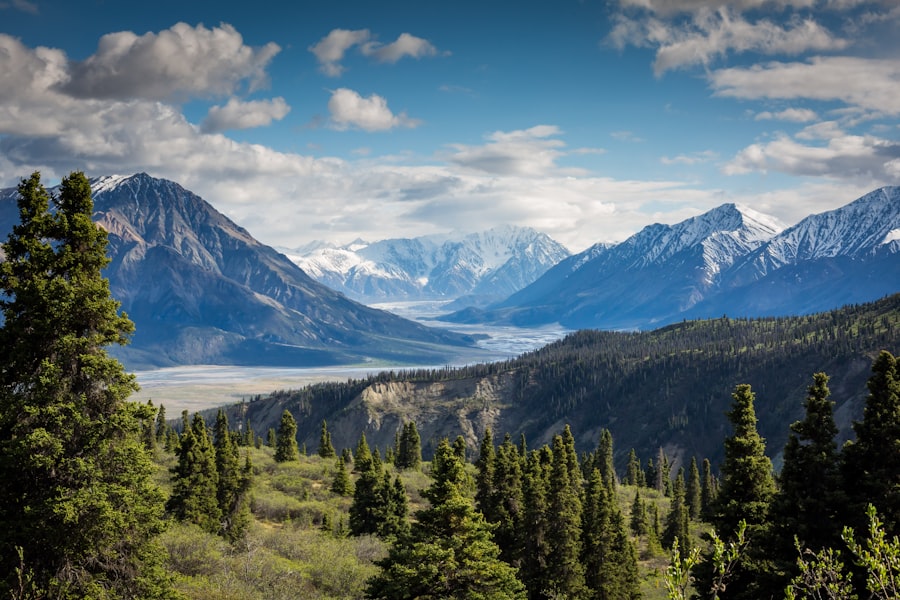
Outside Gifu City, distinctive live houses are scattered in Ogaki, Tajimi, and Takayama. Ogaki is known as the "City of Water" and is the Seinan region's center; Tajimi is famous for ceramics but is a sacred site for rock fans as the birthplace of Kuroyume's Kiyoharu; Takayama has a music environment centered on public halls in Hida.
Major Live Houses in Ogaki, Tajimi, and Takayama
| Venue | Location | Scale | Features | Official |
|---|---|---|---|---|
| Silly Putty | Ogaki City Koriyacho 3-28 Daiichi-Ohashi Building 1F | Small | Jazz cafe & live longtime favorite. Closed Mondays, Tuesdays, holidays. Seinan's jazz hub | Introduction Article |
| Kitchen & Cafe GAJA | Ogaki City | Small | Cafe & live house. Private event available, acoustic-centered | Official |
| TAKE-Y | Tajimi City | Small | Independent operation, locally-rooted. Young bands from Tajimi/Toki gather here | — |
| Barro Culture Hall (Tajimi City Cultural Center) | Tajimi City | Mid to large | Public hall. Can accommodate mid to large-scale live shows, excellent acoustics | Official |
Particularly noteworthy is Tajimi's TAKE-Y. Though a small independently-run venue, it functions as a gathering place for young bands from the Tajimi/Toki area, which produced Kuroyume's Kiyoharu. Kiyoharu himself began learning music through THE WILLARD covers at Tajimi Industrial High School——the region's band culture depth continues today.
Ogaki's Silly Putty is a well-known jazz cafe and longtime favorite, where you can enjoy both live performances and jazz records. If you want to seriously pursue live activity within Ogaki, becoming a regular at Silly Putty is the fastest route. The Barro Culture Hall is a public venue, but is used for local band collaborative events and large-scale artist performances, making it a viable option if you can draw mid to large audiences.
Takayama in Hida has few dedicated live houses, but has public halls like Takayama Citizens Cultural Hall and Shirakawa-go Concert Hall. The Hida region is car-dependent, so distance calculations are necessary.
3 Practice Studios in Gifu — GOU and Shimamura Instruments as Three Pillars

The Noah/Penta/BASS ON TOP chains commonplace in Tokyo and Osaka don't have a single location in Gifu Prefecture. The neighboring Aichi Prefecture (Nagoya) has major chains, but Gifu relies on local studios. The centers are GOU Studio (Kakamigahara) and Shimamura Instruments' Morera Gifu and Aqua Walk Ogaki stores—these 3 bases support band practice in Gifu.
Major Practice Studios in Gifu
| Studio | Location | Band Rate (approx.) | Features | Official |
|---|---|---|---|---|
| GOU Studio | Kakamigahara City (along National Route 21) | 1 hour ¥1,800-2,500 approx. | Established 1989, longtime local studio. 24-hour use available (reservations 10am-10pm). 7 rooms (8-60 tatami mats), 40-car parking, 43-tatami special room available for live performances. Local powerhouse | Official |
| Shimamura Instruments Morera Gifu Store | Motosu City (1 minute walk from Tarumi Railway Morera Gifu Station) | 1 hour ¥1,800-2,500 approx. | National chain reliability. Amp, PA, drums provided. One-stop for instrument purchases too | Official |
| Shimamura Instruments Aqua Walk Ogaki Store | Ogaki City | 1 hour ¥1,800-2,500 approx. | Ogaki's main studio. Excellent access from Seinan area | Official |
What deserves particular attention is GOU Studio. Founded in 1989, equipped with 40-car parking, with a 43-tatami special room where live performances are possible——this is a strength not found even in major Tokyo and Osaka chains. Kakamigahara is positioned between Gifu City and Nagoya, along National Route 21, making equipment loading by car extremely easy. Since it's accessible from both Gifu City and Nagoya, it's ideal as a practice base for mixed bands of Gifu and Nagoya members.
Additionally, you can utilize supplementary studios like Studio PAO (Nakagawa-cho, Ogaki City, affordable rates, recording-equipped) and Gifu City Culture Center's various practice rooms.
3-City Cost Comparison: Gifu vs. Nagoya vs. Tokyo
| Item | Gifu | Nagoya | Tokyo |
|---|---|---|---|
| Studio rate (2h) | Approx. ¥3,600-6,000 | Approx. ¥4,000-7,000 | Approx. ¥6,000-9,000 |
| Live house quota | 12-20 tickets | 15-25 tickets | 20-35 tickets |
| Major live house count | 8 venues | 30+ venues | 300+ venues |
| Bill-sharing opportunities (monthly) | Several | Numerous | Extremely numerous |
| Parking availability rate | High (suburban-focused) | Medium | Low |
| Last train | Runs out around 11pm in many areas | Around midnight | After midnight |
| Time to Tokyo | Shinkansen Nozomi ~1h40m (Gifu-Hashima) | ~1h40m | — |
| Time to Nagoya | Rapid train 20 minutes | — | Shinkansen 1h40m |
Rates are 70-80% of Tokyo's, slightly cheaper than Nagoya. As written in How to Choose Band Practice Studios, being able to secure affordable practice studios is a deciding factor in long-term band continuation. Gifu allows you to save over ¥10,000 monthly on studio costs compared to Tokyo——that's significant.
With reduced costs, you can allocate more time and budget to equipment investment and live tours. Find band members in Gifu on Membo—using map search, you can find members across Gifu City, Ogaki, Tajimi, and even into the Nagoya area.
3 Sessions and Jazz Venues in Gifu
Gifu's session culture has deep roots in jazz and blues. JAZZ LIVE SPOT BAGU in Yanagase has regular sessions every Wednesday at 8pm, with monthly house band collaboration days. Like BackDrop in Nagano, Gifu has a "place where people definitely gather once a week."
| Store | Location | Frequency | Genre | Official |
|---|---|---|---|---|
| JAZZ LIVE SPOT BAGU | Gifu Yanagase | Every Wednesday 20:00 + twice monthly house band | Jazz session-centered, house band collaboration 2nd & 3rd Saturdays | Official |
| Kissaten Kakurenbo | Gifu City Fukumitsuwestern | 07:30-21:00, closed Tuesdays & 3rd Mondays | Modern jazz gallery established 1980. Live performance days available | |
| Silly Putty | Ogaki City Koriyacho 3-28 | Closed Mondays, Tuesdays, holidays, otherwise open | Longtime jazz cafe and live venue. Seinan's jazz hub | Introduction Article |
JAZZ LIVE SPOT BAGU's Wednesday regular sessions are arguably Gifu Prefecture's most stable jazz sessions. "Every Wednesday night, if you go to Yanagase, someone will definitely be there"——this stability is extremely important from a band-finding perspective. As explained in Getting Started with Jam Sessions, your first session attendance should always be as an observer first to get a feel for it. If you want to connect with Gifu's jazz and blues enthusiasts, starting by becoming a BAGU regular is the way to go.
7 Artists from/Connected to Gifu — J-ROCK's Backbone
Gifu Prefecture has produced countless artists indispensable to discussing the J-ROCK scene. Upon research, the presence of Gifu natives exceeds "surprising" territory.
| Artist | Hometown | Genre/Notes | Official/Reference |
|---|---|---|---|
| Kiyoharu (Kuroyume/SADS) | Tajimi City (born in Gifu City → moved to Tajimi in middle school) | Started learning music through THE WILLARD covers at Tajimi Industrial High School. Founded Kuroyume in 1991, the face of 90s visual-kei. Currently active across solo, SADS, and Kuroyume projects | Wikipedia |
| Hitotoki (Kuroyume bassist) | Toki City | Kuroyume original member. Bass, chorus. From Tajimi-Toki region, formed band with Kiyoharu | Wikipedia (Kuroyume) |
| LiSA | Seki City | Formed band "Chucky" in Tomita High School → moved to Tokyo in 2008. Her "Homura" (2019 Demon Slayer OP) transformed anime song history. A global star born from Seki City | Official |
| cinema staff | Gifu Prefecture (Shuki Iida=Gifu City/Tomoki Tsujitomi=Hashima City/Souhei Mishima=Mizuho City) | Formed predecessor band as Gifu high school first-year students in 2003. Breakthrough in 2013 with "Great Escape" (Attack on Titan ED). Local classmate group | Official |
| n-buna (Yorushika) | Gifu Prefecture | Born 1995, former Vocaloid producer. Formed "Yorushika" with suis in 2017. Handles all songwriting and lyrics with literary worldview | Yorushika Official |
| Goro Noguchi | Mino City | Debuted 1971 with "Hakata Miren," one of the new big three. A veteran singer from Mino City | Wikipedia |
| Tamura Pan | Takayama City | Female singer-songwriter from Hida. Unique lyrical world with devoted fan base | Wikipedia |
Notable is that Gifu has artists across visual-kei, anime songs, indie rock, and Vocaloid genres. Kiyoharu (visual-kei), LiSA (anime songs), cinema staff (indie rock), n-buna (Vocaloid-to-Yorushika)—across each current of Japanese rock from the 90s to 2020s, Gifu natives appear.
Particularly symbolic is cinema staff's "local high school first-year students from Gifu City, Hashima, and Mizuho formed together" episode. Gifu has soil where teenagers can start bands——though the scene appears thin, if you seriously form a band with local friends, nationwide possibilities remain. That's Gifu's strength.
Member Recruitment Service Comparison — Which to Use in Gifu
| Service | Posts in Gifu | Features | Best For |
|---|---|---|---|
| Membo | Small (service ~6 months old) | 5-language support, map search, station designation. Specializes in Gifu + Nagoya cross-search | Those considering Nagoya members, those wanting to form with international students |
| OURSOUNDS | Medium | Japan's largest posting volume, Japanese only | Japanese speakers only OK, prioritizing post volume |
| Studio/Instrument shop bulletin boards | Medium | GOU Studio, Shimamura Instruments Morera Gifu/Ogaki | Offline-preference, locally-rooted types |
| Jimoty | Medium | Strong area designation, living area matching | Those seeking members with nearby homes |
In prefectures like Gifu that are "adjacent to Nagoya," services that search not just Gifu alone but Gifu + Aichi together are advantageous. Map search-type services like Membo can search "Gifu City to Kakamigahara to Nagoya City" as one living area range. This is a strength traditional prefecture-based services lack.
Gifu Member Recruitment Post Writing Tips — Using Area Designation and "Nagoya Commute Area"
Gifu's greatest weapons are "20 minutes by train from Nagoya" and "70-80% of Tokyo costs" on both sides. Incorporating these into your recruitment post can reach demographics other prefectures can't capture.
| Element | Poor Example | Good Example for Gifu |
|---|---|---|
| Activity area | "Gifu" only | "Gifu City/Kakamigahara/Ogaki. Meeting at Gifu Station (20 minutes by rapid from Nagoya) OK, welcome those commuting to Nagoya" |
| Music style | "J-rock" | "Kuroyume/cinema staff/Yorushika-style alt/indie" (mention local artist names) |
| Practice frequency | "Once or twice monthly" | "Twice monthly, Saturday nights at GOU Studio (Kakamigahara)" or "Sunday mornings at Shimamura Instruments Morera Gifu" (specific venue and day) |
| Goals | "Want to do live shows" | "Goal: debut at Yanagase ANTS, eventually club-G" (specific venues showing seriousness) |
| Member conditions | "Experience preferred" | "Gifu City/JR Tokaido Line/Meitetsu Nagoya Main Line residents, 20-40s, can practice twice monthly" (area-specific for realism) |
| Nagoya utilization | "Want to perform in Nagoya too" | "Weekly Gifu practice, monthly Sakae/Osu live shows. Welcome Nagoya-resident members" (clarify dual-base nature) |
Including even one local proper noun (GOU Studio, Yanagase ANTS, cinema staff, etc.) instantly boosts recruitment post credibility. "This is written by someone who knows Gifu's scene" becomes clear. This mirrors Saitama's situation (leveraging Tokyo commute areas), and Gifu uniquely leverages "Nagoya commute areas" as a strength other prefectures lack.
Gifu vs. Nagoya vs. Tokyo — 3-Area Comparison
Gifu is geographically close to Nagoya and Tokyo. Understanding the 3-area differences when deciding to start a band makes choices easier.
| Item | Gifu | Nagoya | Tokyo |
|---|---|---|---|
| Practice studio rate (weeknight/h) | ¥1,800-2,500 | ¥2,000-3,500 | ¥2,500-4,000 |
| Live house ticket quota | ~12-20 tickets for debut (approx.) | ~15-25 tickets for debut | ~20-35 tickets for debut |
| Member candidate pool | Small (current est. ~10,000) + Nagoya access possible | Large (central Chubu scene) | Overwhelming |
| Bill-sharing opportunities (monthly at major venues) | ~15-25 shows between club-G/Yanagase ANTS | ~60-80 shows in Sakae/Osu | Hundreds citywide |
| Parking (equipment loading) | Well-equipped at suburban venues (Club-roots/GOU, etc.) | Medium | Varies (many without) |
| Last train/bus | Runs out around 11pm in many areas, car-dependent | Around midnight | Late each line |
| Nagoya scene access | 20-minute rapid train, commute zone | — | 1h40m Shinkansen |
| Unique culture | J-ROCK lineage from Kuroyume/cinema staff, Yanagase culture | Sakae/Osu club/live house concentration, visual-kei origins | Overwhelming diversity |
Gifu's strengths are "affordable rates," "Nagoya proximity," "thick J-ROCK artist presence," "parking-equipped suburban venues". Weekend practice locally (Gifu City/Kakamigahara), monthly performances in Gifu or Nagoya, occasional Tokyo tours—this activity style is uniquely Gifu.
5 Steps to Debut at Yanagase ANTS (Booking Procedure)
| Step | Action | Timeline |
|---|---|---|
| 1. Attend the scene | See at least 5 bill-sharing shows at Yanagase ANTS/club-G. Learn faces of staff/bookers | 1-3 months |
| 2. Prepare demo and profile | Compile 2-3 song audio + band profile + one live video (YouTube, etc.) | 2 weeks |
| 3. Booking inquiry | Contact official site form or book directly via email/SNS DM for booking request | 1-2 weeks for response |
| 4. Accept offer, confirm quota | Debut is bill-sharing format. Ticket quota ~12-20 approx. Band keeps quota-sale revenue | Confirmed 1-2 months before |
| 5. Day-of soundcheck and performance | Soundcheck ~30 min. Equipment includes house amp/drums, bring instruments | Day of show |
club-G, Club-roots, Tajimi TAKE-Y, Ogaki Silly Putty follow similar procedures. What matters is "showing up to the venue first". Trying to build relationships via email alone won't work—bookers won't move. This is the fundamental rule for securing bookings at local venues nationwide, not just Gifu.
Gifu Band Activity Monthly Cost Overview
| Item | Minimal | Standard | Solid |
|---|---|---|---|
| Practice studio (2-4x/month, split 4 ways) | ¥2,000 | ¥4,000 | ¥8,000 |
| Personal practice (2x/month) | ¥1,000 | ¥1,500 | ¥2,500 |
| Live attendance (1-2x/month) | ¥2,000 | ¥4,000 | ¥7,000 |
| Drinks/transportation | ¥1,000 | ¥3,000 | ¥5,500 |
| Equipment maintenance/strings | ¥500 | ¥1,500 | ¥3,000 |
| Live performance fee (0-1x/month) | ¥0 | ¥3,000 | ¥10,000 |
| Monthly Total | ¥6,500 | ¥17,000 | ¥36,000 |
What costs ¥20,000 monthly in Tokyo comes to ¥17,000 in Gifu. Compared to Band Activity Costs: ¥5,000-60,000 Monthly Breakdown, Gifu is very affordable. "Can't afford to commute to Nagoya, but want to seriously do a band"—Gifu suits that band member profile.
5 Steps to Finding Band Members in Gifu
Organizing a Gifu-specific strategy: 20 minutes to Nagoya, Tokyo-level costs at 70-80%, dense J-ROCK artist presence, parking-equipped suburban venues—grasp these three and member finding isn't difficult.
| Step | Action | Gifu Focus |
|---|---|---|
| Step 1: Area diagnosis | Determine which area you can reach: Gifu City / Ogaki / Tajimi-Toki / Kakamigahara / Seki-Mino / Takayama | Decide whether to extend to Nagoya commute zones (JR Tokaido/Meitetsu Nagoya Main Lines) |
| Step 2: Scene reconnaissance | Visit club-G/Yanagase ANTS at least 3 times. Watch bill-sharing shows | If Ogaki/Tajimi-based, also visit local venues (Silly Putty/TAKE-Y) |
| Step 3: Studio regular status | Become regular at GOU Studio (Kakamigahara) or Shimamura Instruments Morera Gifu/Ogaki | Without major chains, local shop information is powerful |
| Step 4: Post recruitment | Post on Membo, etc. specifying "Gifu City," "JR Tokaido Line," "Nagoya commute zone" areas | Cross-designating Gifu+Aichi doubles candidate numbers |
| Step 5: University light music circles/shop boards | Visit light music alumni associations: Gifu University/Gifu Shotoku Academy University/Asahi University/Chukyo Gakuin University, and Shimamura boards | Gifu U = Gifu City, Asahi U = Mizuho City, locally-rooted |
Gifu doesn't work with a waiting stance. Major site posting volume isn't like Tokyo. Getting yourself out to venues and being remembered is where everything starts. Reference 5 Common Traits of Those Who Can't Find Band Members and Solutions too.
3 Mindsets for Continuing Band Activity in Gifu
1. Think "Gifu Plus Nagoya"
Viewing Gifu Prefecture as one isolated area narrows possibilities. Gifu City to Nagoya Station by rapid train is 20 minutes—identical to Omiya to Tokyo travel time. Form a band with Gifu members and Nagoya members, practice at Kakamigahara GOU, alternate bill-sharing between Gifu club-G and Nagoya's Sakae/Osu——that activity style is realistically achievable. "View Gifu as "part of the greater Nagoya metropolitan area" is the mental shift for member finding.
2. Trust J-ROCK Artists' Gene
Kiyoharu and Hitotoki from Kuroyume (Tajimi/Toki), LiSA (Seki City), cinema staff (Gifu City/Hashima/Mizuho), n-buna from Yorushika (Gifu)—Gifu continues producing signature artists from each J-ROCK era. That's not coincidence but because local scene depth allows teens to form bands. Kiyoharu's Tajimi Industrial High School days, cinema staff forming as Gifu high school first-years—that "start young then move to Tokyo" pattern remains viable in Gifu. Regardless of age, doing music "where predecessors existed" is reassuring.
3. Leverage Low Costs for Long-term Strategy
Gifu is 70-80% of Tokyo's, slightly cheaper than Nagoya. You can save nearly ¥10,000 monthly on studio costs—¥120,000+ yearly difference. Channel that toward equipment, live tours, demo production——long-term band continuity benefits hugely. Intending 10-year band life? Gifu is definitively advantageous over Tokyo.
Then find the companion on the same journey. Find Gifu band members on Membo—map search, station designation, 5-language support enable Gifu-Nagoya cross-area finding.
Conclusion — Prime Location 20 Minutes from Nagoya, Prefecture Where J-ROCK Backbone Was Born

Gifu Prefecture's band scene isn't visible on the surface. No major studio chains, live houses at 1/4 Nagoya's count. "The scene is thin" is understandable. Yet investigation reveals Gifu City's Yanagase club-G/ANTS, suburban Club-roots, Ogaki Silly Putty, Tajimi TAKE-Y——each area has genuine venues alive.
And Kuroyume's Kiyoharu (Tajimi), LiSA from Seki City, cinema staff from Gifu City/Hashima/Mizuho, Yorushika's n-buna, Goro Noguchi from Mino City—entirely different-generation, different-genre artists from one prefecture. Gifu's supported J-ROCK's backbone across eras.
Gifu has handicaps: no major studio chains, 1/10 Tokyo's member candidate pool. Yet offsetting are 20-minute train access to Nagoya, 70-80% Tokyo costs, and cultural depth enabling teens to start bands. Unlike Nagano/Niigata/Ibaraki, Gifu has Nagoya-unique strategies.
I haven't lived in Gifu. Yet investigation revealed "Gifu's band scene, as Nagoya metro part, more interesting than expected." Starting a band in Gifu puts you on a side leveraging Nagoya-commute-zone breadth, J-ROCK artist genes, and cheaper Tokyo costs.
Find Gifu band members on Membo. Including "Gifu City," "Yanagase," "Ogaki," "Kakamigahara," "Tajimi," "JR Tokaido Line," or "Meitetsu Nagoya Main Line" in your post increases nearby-area member meeting chances. Extending to Nagoya dramatically thickens the candidate pool.
Guides for other cities available:
- Area-Specific Band Member Finding Methods (National Overview)
- Finding Band Members in Osaka
- Finding Band Members in Nagoya
- Finding Band Members in Saitama
- Finding Band Members in Nagano
- How to Choose Band Practice Studios
- Band Activity Costs: ¥5,000-60,000 Monthly Breakdown
- What is Booking? Complete Explanation of Live House Performance Methods and Ticket Quotas
- Getting Started with Jam Sessions
You in Gifu, your band, your sound—on Nagoya metro's outer ring, in J-ROCK's backbone lineage, your name might just be engraved next. In Yanagase's night, Kakamigahara's studio, Tajimi's small venue, surely waits someone seeking that same sound.
Frequently Asked Questions (FAQ)
Q. What instruments find band members most easily in Gifu?
A. Vocals and guitar are relatively abundant; bass, drums, and keyboard tend to be insufficient. This mirrors nationwide trends, but Gifu especially has chronic drum shortages. Since Gifu alone offers limited candidates, using services like Membo to search "Gifu + Aichi (Nagoya commute zone)" is practical. Extending to Nagoya commute zones 2-3x increases bass and drum candidate numbers. See Why Is Drummer Population Low — Drummer Shortage Reality and Finding Methods for details.
Q. If forming a mixed Gifu-Nagoya band, which studio?
A. GOU Studio in Kakamigahara is optimal. Located along National Route 21 with 40-car parking, accessible within 30-40 minutes from both Gifu City and Nagoya City. Established 1989, features 7 rooms (8-60 tatami), 24-hour use (reservations 10am-10pm), and a 43-tatami special room enabling live performances. If members commute from Ogaki, Shimamura Aqua Walk Ogaki works; if mostly Nagoya-area, Nagoya studios offer alternatives.
Q. Are Gifu live house ticket quotas high?
A. Gifu live house ticket quotas for debut are typically 12-20 tickets. This is lower than Tokyo (20-35) or Nagoya (15-25). For a 4-person band splitting, that's 3-5 tickets per person. Gifu venues being locally-rooted often handle quotas flexibly—"discuss with your bill-sharing partners." Showing genuine scene commitment gets flexible accommodation.
Q. Which is most active: Yanagase, Ogaki, or Tajimi?
A. Gifu City's Yanagase area is most active. club-G (~600 capacity, prefecture's largest), Yanagase ANTS (~230), JAZZ LIVE SPOT BAGU within walking distance, plus Wednesday BAGU sessions. Ogaki centers on jazz-oriented Silly Putty, Tajimi on Kuroyume-hometown TAKE-Y nurturing youth. For serious touring: center on Yanagase; jazz-focused: Ogaki; roots-conscious: Tajimi.
Q. Is nationwide touring realistic from Gifu?
A. Absolutely realistic. Gifu-Hashima Shinkansen Nozomi reaches Tokyo ~1h40m, Nagoya by rapid ~20min, Osaka ~1h. East-Kansai all easily accessible. cinema staff formed 2003 as Gifu high-schoolers, later nationwide. LiSA moved from Seki and became global star. Gifu touring naturally routes Tokyo-Nagoya-Osaka, and car-dependent society enables easy equipment transport.